
Roof Bedding vs. Pointing: Signs Your Tile Ridge Caps Need Repointing
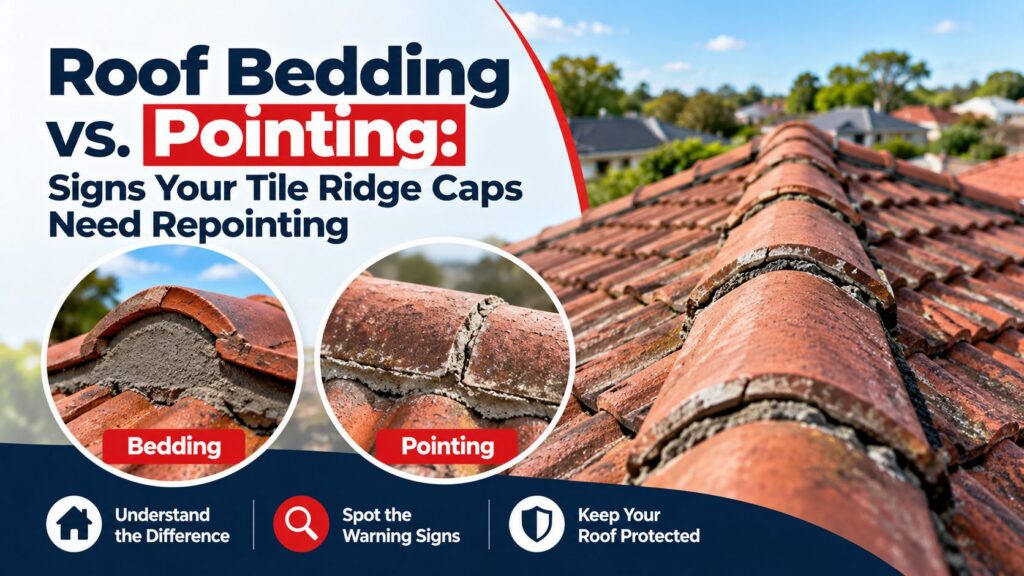
Take a stroll down almost any suburban street in Sydney and look up at the tile roofs. Sitting right along the peaks and angled hip joints, you’ll see lines of triangular concrete or terracotta caps. Roofers call these ridge caps. They look neat, but their actual job is far more serious: they stop wind, rain, and debris from tearing straight into your roof cavity.
Keeping them glued down isn’t a one-step deal. It takes a two-part setup known in the trade as bedding and pointing.
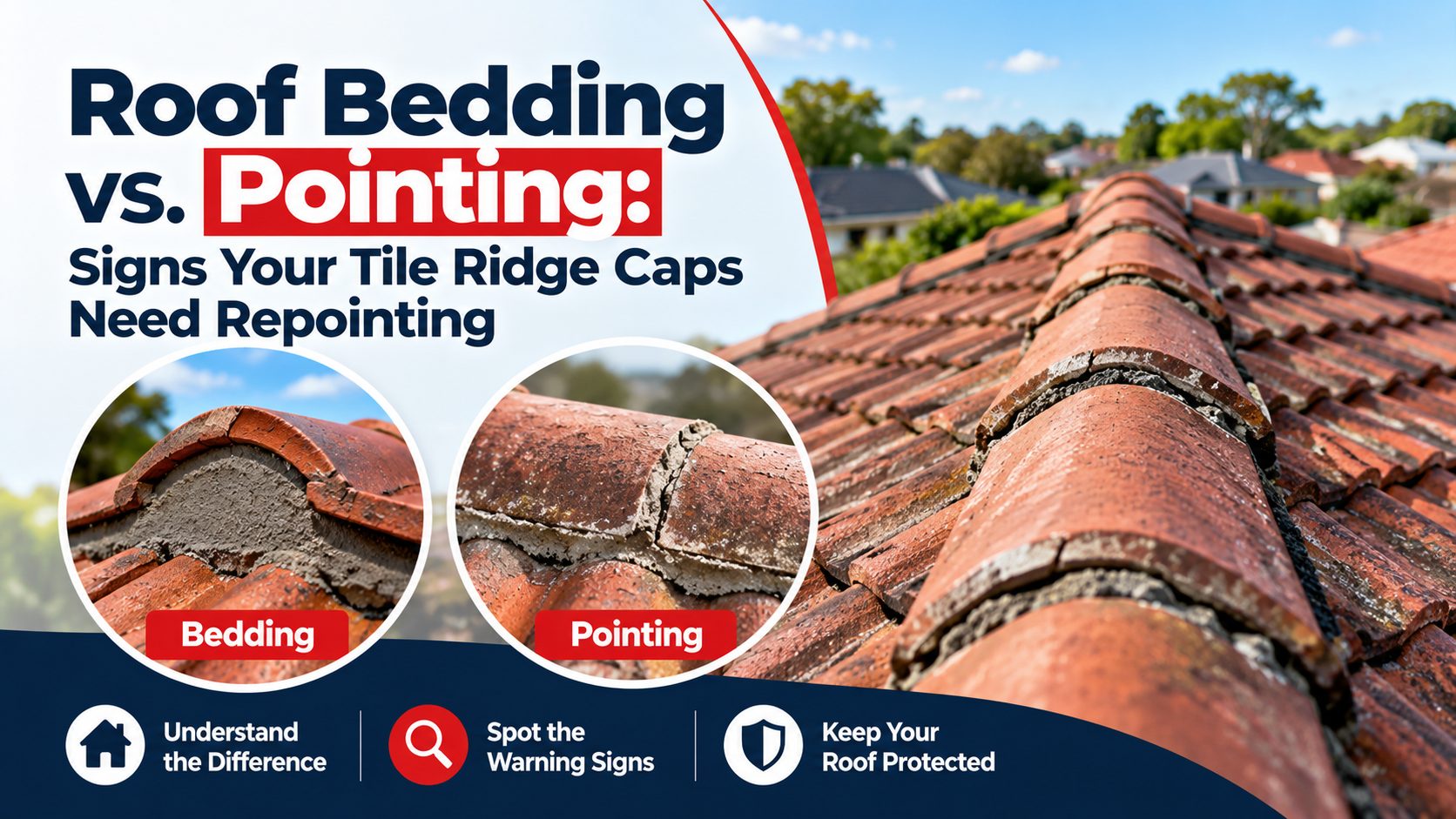
Most homeowners only hear these two words thrown around when a tradesperson is up on their ladder pointing out problems after a downpour. People often assume bedding and pointing are the same thing. They aren’t. While bedding acts as the thick mortar base that props up each cap, pointing is the flexible outer layer that locks water out.
Understanding how roof bedding and pointing work together saves you serious grief down the track. When they start failing, small cracks quickly turn into ceiling water rings, rotted roof trusses, and caps sliding down the roof during an East Coast Low. Here is what you need to know about spotting early wear and sorting it out before the next big storm rolls in.
Recognising early signs of deterioration protects your property from severe storm leaks, timber frame decay, and expensive emergency restorations. In this guide to roof bedding vs pointing, we break down how both components work, how to spot deterioration early, and when your ridge caps need repointing.
What Is Roof Bedding and Pointing?
Tile roofs aren’t built like a solid sealed shell. Whether you have classic terracotta or modern concrete tiles, they are laid piece by piece so water runs down them. But where two slopes meet at the ridge, you get an open gap. That gap has to be sealed tight.
What Is Roof Bedding?
Bedding is the heavy-duty mortar base laid down along the hip and ridge lines. It’s made from a traditional mix of sand and cement, usually about three or four shovels of brickies sand to one shovel of cement. Tradespeople lay a generous bed of this wet mix, press the ridge caps into it, tap them level, and trowel the sides neat. It’s essentially the concrete foundation that gives ridge caps a flat, secure seat.
What Is Roof Pointing?
Pointing is the skin applied over the visible edges of that bedding mortar and around the collars of each cap. Years ago, roofers used a thin sand-and-cement skim coat for this. The trouble was, concrete doesn’t bend. Modern pointing uses flexible polymer and acrylic compounds. These dry into a rubbery, watertight membrane that moves with the roof instead of snapping when the house settles or temperatures swing.
Why Are Bedding and Pointing Important for Tiled Roofs?
Think of bedding as the anchor and pointing as the raincoat. Bedding stops the heavy caps from wobbling and carries their weight. Pointing seals the edges so driving rain can’t blow underneath. If either layer fails, wind catches the caps, rain seeps into the roof space, and ceiling Gyprock turns to mush. We cover the basics in our guide to roof bedding and pointing as the first line of defence for your roof.
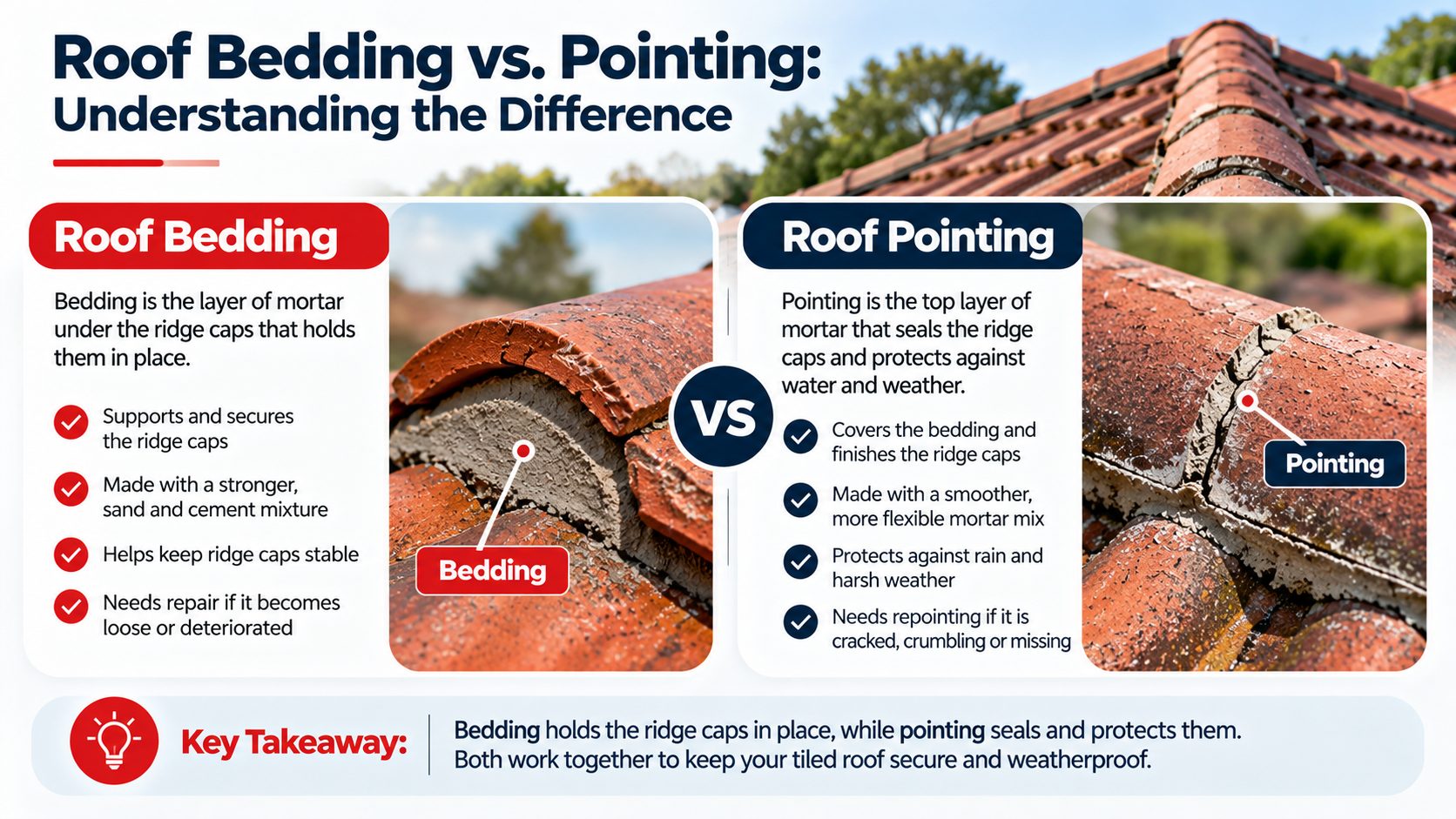
Roof Bedding vs. Pointing: What Is the Difference?
To keep it simple, here is a quick breakdown of how these two layers differ:
| Component | What It’s Made Of | Main Job on Your Roof |
|---|---|---|
| Bedding | Brickies sand & cement mortar | Holds structural weight, levels the caps |
| Pointing | Flexible acrylic polymer compound | Waterproofs the joins, absorbs roof flex |
Materials Used for Roof Bedding
Bedding relies on coarse brick sand mixed with cement. Once it cures, it’s rock-hard and strong enough to support heavy caps for decades. The catch? It has zero give. If the house settles on its slab or timber framing shrinks, rigid mortar cracks wide open.
Materials Used for Roof Pointing
Modern flexible pointing comes pre-mixed in buckets, tinted to match your tile colour. It’s loaded with synthetic resins designed to handle blistering Australian sun without going brittle. When high heat causes tiles to expand, the pointing stretches with them.
How Bedding and Pointing Work Together
You can’t have one without the other. Without bedding, ridge caps wouldn’t sit straight or support their own weight. Without flexible pointing over the top, the mortar bed would soak up rainwater like a sponge and crumble under seasonal temperature changes.
When Does Each Component Need Repair?
Pointing sits right in the firing line of Sydney weather, so it usually shows surface wear first. If you notice minor hairline cracks or peeling skin while the mortar underneath is still rock-solid, repointing roof tiles solves the problem cleanly. But if the mortar bed itself has cracked through, crumbled into sand, or lost its grip on the tiles, the whole line has to be rebedded from scratch.
What Are the Signs Your Roof Ridge Caps Need Repointing?
Because ridge caps sit way up at the highest point of your roof, problems are easy to miss from your front driveway. Here are the warning signs you should watch for:
Cracked or Crumbling Roof Pointing
Look for visible fractures along the seam where the pointing meets the tile surface. If the pointing looks dried out, chalky, or has small chunks falling away, the seal is broken. Water won’t take long to find those openings. Our guide to roof pointing repair and why it’s important explains what the fix involves.
Loose or Displaced Ridge Caps
If a ridge cap looks slightly crooked from the street, or you notice one sitting higher than its neighbour, the mortar bond has let go. In high winds, a loose cap can lift entirely and slide down your roof plane.
Gaps Between Ridge Caps and Roof Tiles
There should never be daylight visible between the bottom edge of a ridge cap and the roof tile profile. Gaps mean the mortar has shrunk, cracked, or washed out. Driving rain will blow right into those gaps.
Water Leaks Around the Roof Ridge
If you see brown watermarks appearing on ceilings directly under the apex of your roof, water is getting past the capping. Don’t ignore small patches. Arranging prompt roof pointing repair stops moisture from rotting the timber ceiling joists underneath. Not sure where the water is getting in? Our guide on how to find a roof leak inside your ceiling walks you through it, and our roof leak repairs team can fix it.
Deteriorating Mortar Along the Ridge Line
Finding sandy grit or hard mortar crumbs washing down your gutters and out of your downpipes is a classic giveaway. That grit is your ridge bedding breaking down after years of weathering.
What Causes Roof Bedding and Pointing to Deteriorate?
Even the best-built roofs don’t stay pristine forever. Several natural factors break down ridge mortar over the years:
Ageing and Natural Weathering
If your home was built in the 1980s or 1990s, chances are it was finished with old-fashioned sand-and-cement pointing. Those older rigid mixes rarely last beyond 10 to 15 years in Australian conditions before drying out and cracking.
Heavy Rain, Wind, and Temperature Changes
Sydney roofs take a beating. On a 38-degree summer day, dark roof tiles can hit over 65 degrees, only to cool rapidly when a sudden southerly buster brings cold rain. This thermal shock causes continuous expansion and contraction that splits rigid mortar.
Poor Installation or Previous Repairs
We often see amateur repairs where someone smeared fresh pointing over dirty, mossy tiles, or mixed the mortar far too dry. If the surface wasn’t prepped properly, the new layer peels off like dried paint within a couple of seasons.
Movement in the Roof Structure
Houses move. Green structural timbers dry out and twist slightly, foundations settle, and strong winds push against the roof structure. If the pointing lacks elasticity, that slight movement snaps the bond instantly.
Can You Repair Roof Pointing Without Replacing the Bedding?
This is one of the most common questions homeowners ask, and the honest answer comes down to what the mortar looks like underneath.
When Repointing Alone May Be Sufficient
If your ridge caps are still straight, tight, and firmly glued to the mortar bed, you don’t need to rip everything off. A roofer can grind away loose surface pointing, pressure-clean the joints, and trowel a thick bead of flexible pointing compound over the existing bed. It’s faster, cleaner, and far easier on the wallet.
When Roof Rebedding Is Necessary
If the caps wobble when touched, or the mortar underneath turns to dust when poked with a trowel, repointing over it is a complete waste of time. Slapping new flexible compound over rotten mortar is like painting over rusted steel. It will fall apart within months. In that case, every cap has to come off, old cement must be chipped away, and fresh bedding laid.
How a Professional Roof Inspection Determines the Right Solution
You can’t always tell mortar quality from the ground. Getting a qualified tradesperson up there for a professional roof inspection gives you an accurate assessment of whether you need a simple repoint or a structural rebed.
What Happens If You Ignore Damaged Roof Bedding and Pointing?
Leaving cracked caps unattended is always a gamble. Here’s how a small problem turns into an expensive headache over time:
| Stage of Damage | What’s Happening on the Ridge | The Impact Inside Your Home |
|---|---|---|
| Early Warning | Fine cracks appearing along pointing edges | Slight dampness in roof insulation batts |
| Mid-Level Wear | Pointing falling out, mortar bed loosening | Dirty ceiling rings, silt washing into gutters |
| Complete Failure | Caps loose, shifted, or blown off in gusts | Active ceiling leaks, rotted trusses, drywall collapse |
Increased Risk of Water Ingress
Once pointing breaks open, wind-driven rain runs along roof rafters, pooling on top of ceiling plaster until it breaks through. See how roof pointing repair protects your home from leaks and water damage.
Loose Ridge Caps and Roof Safety Concerns
Loose caps weigh several kilograms each. During wild weather, gusting winds can pick them up and send them tumbling into gutters, through skylights, or onto cars parked below.
Further Roof Deterioration and Repair Costs
Saturated timber roof trusses rot fast, and wet conditions invite subterranean termites straight into your ceiling cavity. Fixing a few linear metres of pointing costs pennies compared to timber structural repairs.
How Often Should Roof Bedding and Pointing Be Inspected?
Staying ahead of problems saves you thousands in storm repairs:
Routine Roof Maintenance for Sydney Homes
Get your tiled roof checked over every 3 to 5 years. Catching small hairline cracks early means a quick spot-pointing job rather than a full strip-and-rebed down the track.
Warning Signs to Check After Severe Weather
After a big storm, do a quick lap of your house. Look up for any crooked caps, check your downpipe outlets for cement pebbles, and scan bedroom ceilings for new shadows.
When to Arrange a Professional Inspection
If your home is over a decade old and has never had its ridge lines refreshed, it’s well worth having an experienced eye take a look before winter rain sets in.
Frequently Asked Questions About Roof Bedding and Pointing
How Long Does Roof Pointing Last?
Old sand-and-cement pointing generally starts cracking after 8 to 12 years. High-grade flexible polymer pointing applied over solid bedding easily lasts 20 to 25 years in typical Australian conditions.
Is Roof Repointing Different from Roof Rebedding?
Yes. Rebedding means taking the caps off completely, discarding old mortar, and laying a new concrete base. Repointing means sealing the outside edges with flexible compound while leaving the sound mortar base in place.
Can Cracked Roof Pointing Cause Leaks?
Absolutely. Water enters even hairline splits through capillary action, especially when strong winds push rain upward along roof hips.
How Much Does Roof Pointing Repair Cost in Sydney?
Pricing depends on the total metres of ridge line, roof pitch, tile type, access difficulty, and whether caps need rebedding first. A quick on-site look is always needed for a proper quote.
Can Roof Ridge Caps Be Repointed Without Removing Them?
Yes, as long as the mortar bed underneath is still structurally sound, tightly bonded, and sitting flat.
Conclusion: Know When Your Roof Ridge Caps Need Attention
Bedding and pointing have two completely different jobs, but your roof can’t keep water out without both working together. Bedding gives your ridge caps a sturdy base, while flexible pointing seals the edges tight against the weather.
Don’t wait for water to start dripping onto your hallway rug before checking the health of your roofline. If you’ve spotted crumbling cement, loose caps, or mortar grit in your gutters, get in touch with The Sydney Roof Doctor today via our contact page or call 0419 162 112. Our team delivers honest assessments and lasting roof bedding and pointing services to keep your home safe and dry through every season.
Our services
Get your free quote today
Tell us about your roof or gutters and we will get back to you.
Call 0419 162 112"*" indicates required fields
Keep reading
Roof Bedding and Pointing: The First Line of Defence for Your Roof
8 Jan 2026 · 3 min readYour roof handles more than you realise: harsh sun, heavy rain, wind, and sudden temperature changes. Over time, even a well-built roof…
Read article →
How to Find a Roof Leak Inside Your Ceiling (Before Major Storm Damage Hits)
27 Oct 2026 · 9 min readThere is nothing quite like sitting on your couch during a wild Sydney storm only to hear that sudden, dreaded tap-tap-tap on…
Read article →
Whirly Birds Installation in Sydney: How Good Roof Ventilation Helps Prevent Mould During Winter
25 Jun 2026 · 8 min readHave you noticed mould on your ceiling or walls during winter, even though your roof doesn't seem to be leaking? You're not…
Read article →