
It usually starts with a single, rhythmic drip-drop against the floorboards during a classic Sydney afternoon downpour. You look up, hoping it’s just condensation, but the tell-tale brown ring forming around your skylight tells a different story.
A leaking skylight is one of the most frustrating roofing issues a homeowner can face. Because skylights are essentially a “hole” in your roof’s protective envelope, they are the first to fail when heavy rain hits. If left unaddressed, that minor drip can quickly escalate into ruined ceilings, mould growth, and structural timber rot.
At The Sydney Roof Doctor, we’ve seen how the harsh NSW climate, from scorching UV rays that perish seals to sudden East Coast Lows, takes a toll on even the highest-quality installations.
In this guide, we’ll break down why your skylight is failing, how to tell if you need a simple repair or a full replacement, and the immediate steps you should take to protect your home.

The Common Culprits: Why Skylights Leak in Heavy Rain
It’s easy to blame the glass, but the problem is rarely the pane itself. Skylights are complex systems that integrate directly with your tiles or metal sheeting. Here is why they usually fail:
1. Corroded or Improper Flashing
Flashing is the metal “skirt” that directs water away from the skylight and onto the roof surface. In Sydney’s coastal suburbs, salt air can accelerate corrosion. If the flashing was installed poorly, or if it has lifted due to thermal expansion, water will find its way underneath and directly into your light shaft.
2. Degraded Sealants and Gaskets
Skylights rely on high-grade rubber gaskets and silicone sealants to remain watertight. Over time, Sydney’s intense summer heat causes these materials to dry out, crack, and shrink. Once the seal is broken, water ingress is inevitable during the next storm.
3. Blocked Weepholes and Debris
Most modern skylights have “weepholes” designed to let internal condensation escape. If your roof is surrounded by gum trees, leaves and silt can block these drainage points. When water can’t get out, it backs up and leaks into your home.
4. Roof Tile or Shingle Failure
Sometimes, the skylight isn’t the problem at all. A cracked tile or a blocked valley nearby can allow water to track along the roof battens, only to drip through the skylight opening, making it look like the skylight is the culprit. This is where professional leak detection becomes vital.
Warning Signs You Should Never Ignore
Are you dealing with a minor nuisance or a roofing emergency? Look for these red flags:
- Water Staining: Yellow, brown, or bubbling paint on the drywall around the skylight shaft.
- Condensation Between Panes: If you see fogging inside the glass, the factory seal has likely failed, compromising the unit’s thermal and structural integrity.
- Dripping During Wind: If it only leaks when the wind blows from a certain direction, it usually points to a flashing or “lapping” issue.
- Musty Odours: A persistent damp smell in the room often indicates trapped moisture and active mould growth behind the plaster.
Step-by-Step: What to Do When the Drip Starts
If it’s currently raining and you’ve discovered a leak, don’t panic. Follow these steps to minimise the damage:
- Contain the Water: Place a bucket under the drip. If the water is running down the wall, pin a piece of string to the leak point and lead it into the bucket to act as a “wick.”
- Clear the Area: Move furniture, rugs, and electronics away from the splash zone.
- Check for Obstructions: If it’s safe and you have a low-pitched roof, check for visible debris (like branches or leaf build-up) around the top of the skylight that might be damming the water. (Never climb on a wet, slippery roof, leave this to the pros).
- Document the Leak: Take photos and videos of where the water is entering. This helps your roofing specialist diagnose the root cause faster.
- Call a Specialist: Contact a professional for leaking skylight repairs to prevent the damage from spreading to your ceiling joists.
Repair vs. Replacement: Which One Do You Need?
Many homeowners worry that a leak means a total replacement is required. That isn’t always the case.
| Scenario | Recommended Action |
| Damaged or rusted flashing | Repair: Flashing can often be replaced or resealed without removing the entire skylight. |
| Minor sealant cracking | Repair: Scraping out old silicone and applying high-grade roofing sealant can add years to a unit. |
| Cracked glass or failed internal seal | Replacement: If the glass itself is compromised or fogged, a new unit is usually more cost-effective. |
| Unit is 15+ years old | Replacement: Most skylights have a 10–20 year lifespan. If it’s old, a repair may only be a temporary band-aid. |
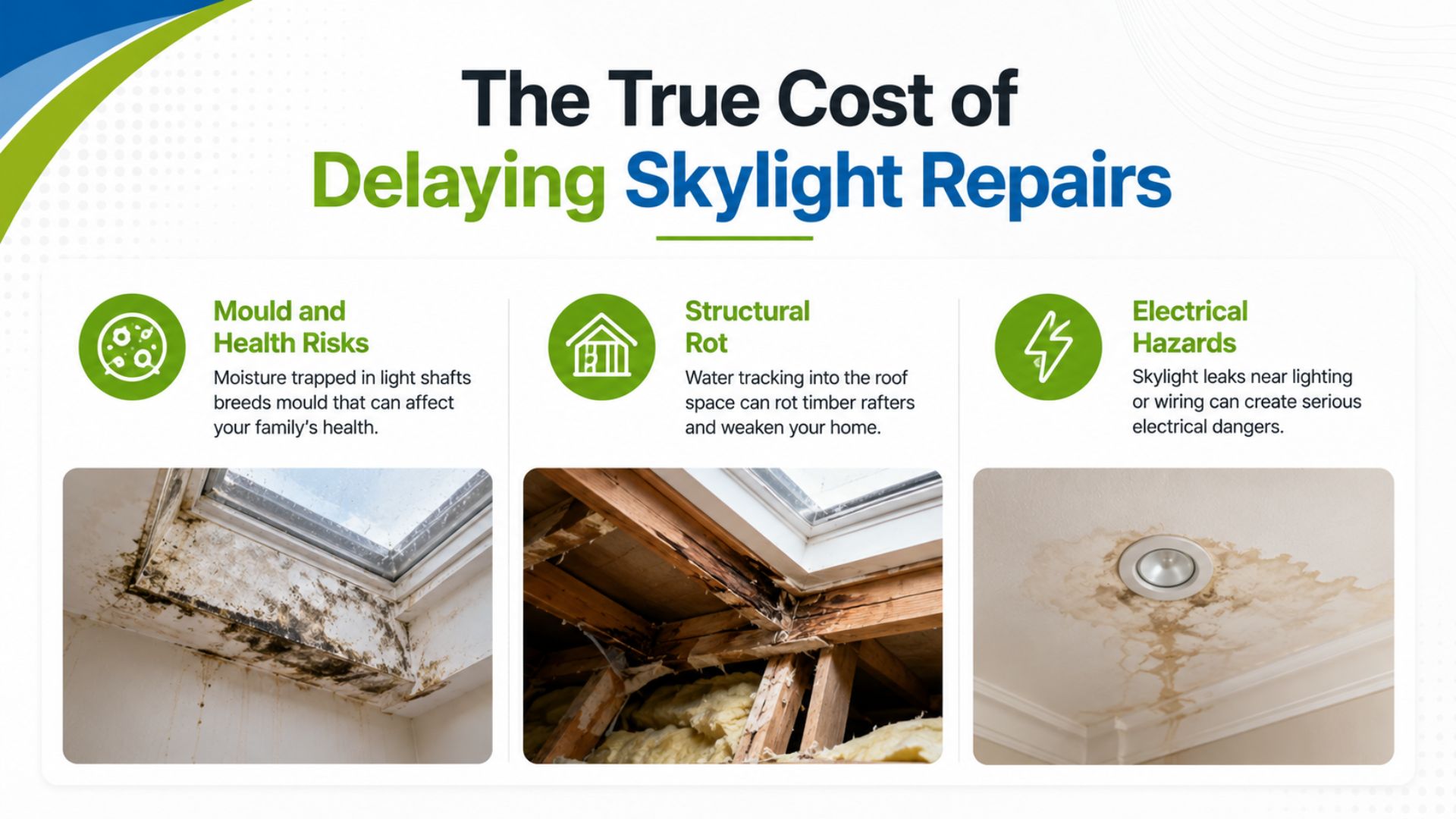
The True Cost of Delaying Leaking Skylight Repairs
It is tempting to put a bucket under the leak and “wait until next year.” However, skylight leaks are rarely stagnant; they get worse with every rain cycle.
- Mould and Health Risks: Moisture trapped in light shafts is a breeding ground for black mould, which can affect your family’s respiratory health.
- Structural Rot: Water tracking into the roof space can rot the timber rafters that hold your roof up. Replacing a rafter is significantly more expensive than fixing a seal.
- Electrical Hazards: Many skylight shafts are located near recessed lighting or ceiling fans. Water and electricity are a dangerous combination.
Professional vs. DIY: Why the “Quick Fix” Often Fails
We often see “repaired” skylights that have been smothered in hardware-store silicone. While this might stop the leak for a week, it often creates a “water dam” that eventually causes more severe damage.
Why hire a professional like The Sydney Roof Doctor?
- Correct Materials: We use UV-stable, industrial-grade sealants designed for the Australian sun.
- Structural Knowledge: We understand how water moves across different roof profiles (Kliplok, Corrugated, or Terracotta tile).
- Warranty: Our repairs come with the peace of mind that if it leaks again, we’ll be back to fix it.
Frequently Asked Questions
Q. How urgent is a skylight leak?
Extremely urgent. Even if the leak stops when the rain stops, the moisture trapped in your roof structure continues to cause damage. It should be inspected within 24–48 hours of discovery.
Q. Can a leaking skylight be fixed from the inside?
Generally, no. Fixing a leak from the inside only hides the problem; it doesn’t stop the water from entering your roof. Repairs must be done from the exterior to ensure the roof remains watertight.
Q. How much do skylight repairs cost in Sydney?
Costs vary depending on the cause. A simple reseal and clearing of debris might cost a few hundred dollars, while complex flashing replacement or unit upgrades will be higher. We provide transparent quotes after a physical inspection.
Q. Does my home insurance cover skylight leaks?
Usually, insurance covers “sudden and accidental” damage (like a branch falling through the glass during a storm). However, leaks caused by “wear and tear” or lack of maintenance are often excluded.
Q. How long does a typical repair take?
Most skylight repairs can be completed within 2–4 hours, depending on the complexity of the flashing and roof access.
Protect Your Home with The Sydney Roof Doctor
Don’t wait for the next Sydney storm to test your roof’s limits. Whether you’ve noticed a small damp patch or a steady stream of water, The Sydney Roof Doctor is here to help. We specialise in Roof Leak Repairs in Sydney and have saved countless homeowners from the stress of structural water damage.
Stop the drip before it becomes a flood.
[Contact The Sydney Roof Doctor Today for a Professional Inspection]