The Day the Ceiling Cried: What Sydney’s Wild 2026 Weather Taught Us About Our Roofs

The afternoon started with a strange, dark purple sky over the Parramatta River, a classic Sydney warning sign. Within twenty minutes, a huge storm hit the coast, throwing sheets of heavy rain right against the windows. You sat on the couch with a warm drink, feeling safe inside.Then came the sound. Drip. Drip. Plop.

You looked up. Right there, in the middle of your freshly painted lounge room ceiling, a dark brown ring was spreading like ink on paper.

Dealing with a leaking roof is never just about water. It is a stressful surprise that brings immediate worry. It breaks your peace of mind, threatens your home’s value, and makes you ask: How much is this going to cost me?

The truth that every real roofer knows is that water is tricky. It enters through a cracked tile or a rusted metal channel, runs sideways along the wooden beams inside your ceiling, and drops into your room far away from the actual hole on the outside.

Let us look at what is really happening up there and see how to fix your roof so it protects your family again.

leaking roof

THE 60-SECOND STORM EMERGENCY PLAN

If your ceiling is sagging or dripping right now, do not panic. Take these simple steps to stop the damage before reading the rest of the story:

  • The Bucket Trick: Put a deep bucket under the drip, and drop an old towel or sponge inside. This stops the loud “plop” sound so you can think clearly.
  • Save the Ceiling: If your plasterboard ceiling is bulging down like a water balloon, take a long screwdriver and poke a small hole right in the middle. Draining this trapped water stops the whole ceiling from falling down into your room.
  • Stay Safe: Never climb onto a wet, slippery roof while it is raining. Let a licensed professional look for the leak when the weather is dry.

Why Roofs Fail: Real Stories from Sydney Neighborhoods

Every house has a story, and during the wild storms across New South Wales, those stories showed up on our ceilings. To understand why roof leak repairs in Sydney are so common, we have to look at the exact spots that break when the weather gets bad.

The Leafy Trap on the North Shore

Think about a beautiful old home sitting under the huge gum trees on the North Shore. The owner loved the shade, but those trees constantly drop leaves and twigs.

During a heavy downpour, the leaves washed into the gutters and blocked them completely like a dam. The water had nowhere to go, so it rose up, went over the back of the gutter, and poured straight into the house walls. This is why regular gutter cleaning Sydney is not just a weekend chore—it is the best way to stop water from flooding your home.

The Cracked Cement Mystery

On a classic tiled home, the round ridge tiles at the very top peak are held down by a mix of cement and sand mortar. Think of it like the mortar between bricks. Sydney’s weather is tough, super hot 40°C summer days followed by sudden, cold stormy winds. This forces the tiles to grow and shrink over and over.

Over the years, this constant movement cracks the cement. When a big storm hits, the wind pushes rainwater straight through those tiny cracks, sending water dripping down into your roof space.

The Broken Valley Flood

Your roof valleys are the metal V-shaped channels where two slopes of your roof meet. They carry more rushing water than any other part of your home.

When a valley gets old and rusty, or gets blocked with sticks, it stops working. Water backs up under the roof tiles and floods your ceiling beams, making a professional roof valley replacement the only real way to fix the problem for good.

The Warning Signs: How Your Roof Asks for Help

Your home always tries to warn you before a small leak becomes a massive, expensive headache. You just need to know what to look and listen for.

Use this easy guide to match what you see or hear with the hidden trouble happening above your head:

What You Hear or SeeWhat Is Actually Happening AboveThe Long-Term DangerWhat To Do
A faint ticking sound during heavy rain.A small leak is dripping onto dry wood beams or the silver paper under your tiles.Rotting wood framing and ruined insulation that makes your home colder.Check it soon
Bubbling or peeling paint on walls or outer wooden boards.Water has run down inside the wall, soaking the plaster and pushing the paint off.Rotten wall frames and hidden mold that is bad for your health.Fix it quickly
A musty, damp smell in wardrobes or up the hallway.Trapped water has turned your dark roof space into a home for mold and fungi.Bad air inside the house can cause breathing problems.Fix it quickly
Flickering lights or a power switch that trips when it rains.Rainwater is running down electrical pipes and soaking your active wires.Serious fire hazards and danger of electrical shocks through wet plaster.Call emergency help

Step-by-Step: How We Make Your Home Dry Again

When you find a leak, taking clean, simple steps can save you thousands of dollars in extra repair costs.

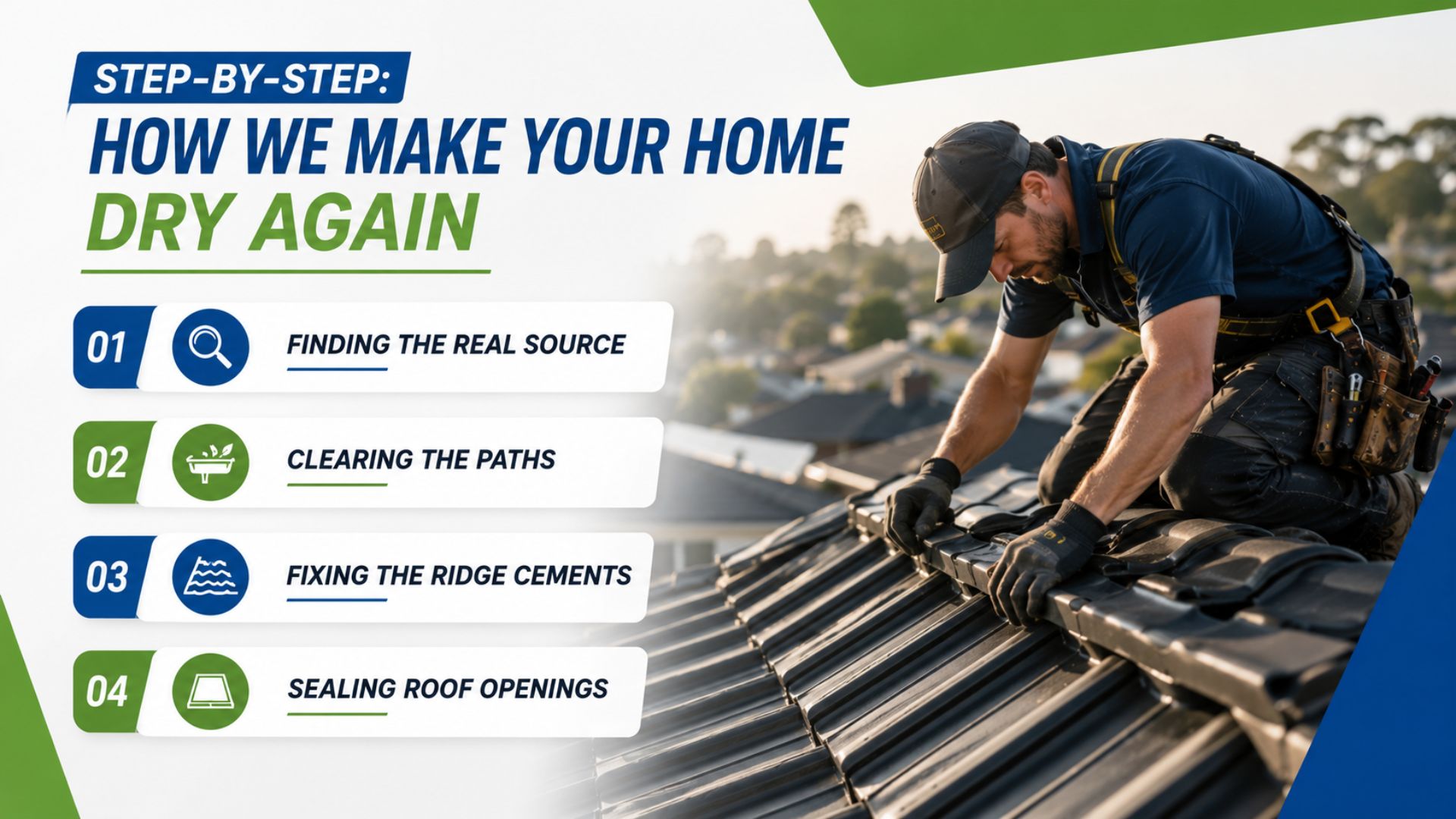
1. Finding the Real Source

A real leak check does not just look at the wet spot on your ceiling. A tradesman climbs into the dark roof space with tools and lights to follow the dry water tracks on the wood back to the exact spot where the water gets in from the outside.

2. Clearing the Paths

Before fixing anything, the water paths must be completely clean. Cleaning out all the dirt and leaves with proper Sydney gutter cleaning ensures that future rain flows away safely from your rooms.
roof leak repairs in Sydney

3. Fixing the Ridge Cements

If your top ridge tiles are loose, a team must lift them up, clean away the old broken cement, and put down fresh mortar. Then they seal it with a modern, stretchy compound during a professional roof pointing repair job. This stretchy material moves with your house, so it never cracks again.

4. Sealing Roof Openings

Anywhere something cuts through your roof is a weak spot. If an old skylight seal has dried out and cracked under the hot sun, doing proper leaking skylight repairs ensures the glass edges stay completely airtight.

Patching vs. Replacing: What is Best for You?

Many homeowners ask: Can I just patch this spot one more time, or is it time to change the whole thing? Here is the honest truth.

The Skylight Choice

If your skylight leaks because the metal flashing around it has cracked, a targeted skylight repairs Sydney job can rebuild the seal perfectly. This saves you the cost of buying a whole new window. But if the actual window frame is warped, rusted, or bent out of shape, a new one is the only way to stay dry during winter storms.

The Mortar Dilemma

If just one ridge tile moved because a tree branch hit it, a small patch might buy you some time. But if the cement along your entire roof has turned to sand, a quick patch is a waste of money. You need a full roof bedding and pointing job to lift, reset, and seal the whole top line of your house.

Why Cheap Fixes Cost You Double: The Danger of Silicone

It is very tempting to hire a cheap handyman who promises to fix your leak with a quick squeeze of silicone from a tube.

Here is why that goes wrong: normal hardware-store silicone breaks down fast under Sydney’s harsh sun. It shrinks, cracks, and forms a tiny pocket that traps water against the metal or tile. This makes rust and wood rot happen even faster where you cannot see it. A simple $400 flashing fix can easily turn into a $4,000 structural rebuilding job.

Always make sure your roofer has a valid license with NSW Fair Trading. Real safety comes from professional guarantees and using strong, trade-grade materials built for our local weather.

Time to Act: Protect Your Home

A leaking roof never fixes itself, and waiting only lets the water destroy your wooden frames, ruin your insulation, and spoil your living space.

By taking care of your roof maintenance early, you protect your home’s value and can sleep easy through every storm.

Do not wait for the next big storm cloud to show up over your house to see if your roof can handle the rain. Call the friendly, local team at The Sydney Roof Doctor today for a proper roof check. We will find the exact cause of your leak and give you a permanent, high-quality fix to keep your home warm and dry.
Frequently Asked Questions

Why did my roof start leaking this year when it was fine last year?
The latest weather has brought a lot of “rain bombs”, which means a massive amount of water falls in a very short time, mixed with heavy winds. Roofs that drain fine in normal rain can overflow when water fills the gutters faster than the pipes can carry it away. This pushes water backward under your tiles or metal roof sheets.
Can solar panels or eco-friendly designs cause hidden leaks?
Solar panel brackets have to be screwed straight through your roof tiles or metal sheets into the wooden beams underneath. If the installer used cheap seals or accidentally cracked a tile while walking up there, it can create a slow, hidden leak under the panels that you only notice after days of heavy rain.
Why is mold growing on my ceiling if I don't see water dripping?
You probably have a tiny leak or a bad dampness problem in your roof space. When warm, humid air gets trapped in a roof with no airflow, it turns into water droplets on the cold underside of your roof. This water drips into your insulation. Installing roof vents like whirlybirds keeps your roof dry and clean.
Will my home insurance pay for a leak caused by a storm?
Insurance companies pay for sudden storm damage (like a tree branch falling and smashing your roof). They do not pay for gradual wear and tear (like old, rusted gutters or cracked cement that you did not fix for years). If the leak happened because the roof was already old and ignored, they will likely deny your claim.
Why do flat metal roofs leak more than sloped tile roofs?
Flat roofs do not have a natural slope, so water drains off them very slowly. They rely entirely on perfectly glued joins and waterproof sheets. Over time, as your house moves slightly with the ground, those joins stretch and crack. Standing water will find even the smallest gap and get inside.

Why Your Roof Leaks in Severe Storms: Essential Sydney Roof Repair Guide

It is 2 pm on a stormy Tuesday in Sydney. Out of nowhere, a huge downpour hits the North Shore, dumping months of rain in less than an hour. As you sit in your living room, you notice a slow drip, drip, drip coming from the ceiling.Your heart sinks. You instantly wonder: Is my ceiling going to fall in? How much is this going to cost me? And why does my roof only leak when the rain gets really heavy?If you are dealing with a frustrating leaking roof, you are not alone. Many Sydney homeowners face this exact problem. Their roof works perfectly fine during light rain, but completely fails during a heavy Sydney summer storm.

Ignoring a small drip today can lead to thousands of dollars in structural damage, dangerous mould growth, and risks to your family’s safety tomorrow. This guide from The Sydney Roof Doctor explains exactly why your roof leaks during heavy rain. It also gives you a simple post-storm inspection checklist and helps you figure out when to call for professional roof leak repair Sydney services.

leaking roof repairs Sydney

Why Your Roof Leaks Only During Heavy Rain: How It Works

Many homeowners think that water enters the house directly above the ceiling stain. In reality, water is tricky. It gets in through a gap or crack on the outside of your roof and runs down timber beams, foil insulation, or structural supports. It can travel several metres sideways before it finally drips onto your ceiling plaster.

But why does this only happen when it pours? During a heavy storm, your roof has to handle massive amounts of water. When the drainage system cannot keep up, the water backs up, rises above the overlapping edges of your roofing materials, and floods into your home.

The most common causes of leaks during heavy rain include:

1. Damaged or Blocked Roof Valleys

Your roof valleys are the metal channels where two sloping sections of your roof meet. They act as the main highways for rainwater. Over time, leaves and twigs from nearby trees build up in these channels. During light rain, water can flow around the dirt. But during heavy rain, the leaves act like a dam. The water backs up, spills over the sides of the metal channel, and pours into your ceiling, meaning you need a roof valley replacement right away.

2. Flashing Failures Around Skylights and Chimneys

Flashing is the protective sheet metal installed around things that poke out of your roof, like skylights or chimneys, to make them waterproof. When heavy rain comes with strong winds, the water hits your roof sideways. If your flashing is cracked, rusted, or loose, the wind forces the water right underneath it. This is why homeowners often need specialized leaking skylight repairs after a big coastal storm.

3. Blocked Gutters and Downpipes

When your gutters are full of mud and leaves, they cannot carry heavy water away fast enough. The water fills up the gutters, flows backward over the edge, and floods into your eaves and inside walls. Keeping up with regular gutter cleaning Sydney or commercial gutter cleaning Sydney is your best way to stop this from happening.

4. Cracked Roof Bedding and Pointing

Tile roofs use cement bedding and a flexible sealing glue called pointing to lock the top ridge tiles in place. Over the years, Sydney’s hot sun and changing weather cause this mortar to crack and crumble. During a heavy storm, rainwater gets into these cracks and soaks the wooden structures underneath.

5 Critical Post-Storm Signs You Should Never Ignore

Once the storm stops and it is safe to go outside, you should do a quick visual check. Walk around your house and look for these five warning signs that show you need help from roofing repairs Sydney experts immediately.

1. Water Stains and Bubbling Plaster on the Ceiling

Look for yellow or brown rings on your ceiling or down your inside walls. If the ceiling feels soft, spongy, or looks like it is bubbling, water is pooling on the other side of the plaster.

2. Cracked, Broken, or Missing Roof Tiles

Look up at your roof from the ground. Scan the roofline for any tiles that look crooked, cracked, or are missing completely. A single broken tile leaves a wide-open gap for the next storm to exploit.

3. Rusted, Sagging, or Overflowing Gutters

If you see water marks on the bottom of your gutters, or if they are sagging from the weight of trapped water and leaves, your drainage system is failing. Regular Sydney gutter cleaning keeps your gutters clear and working.

4. Broken Seals Around Skylights

If you have skylights, check inside the house around the window frame. Look for active dripping, fog or condensation trapped between the glass panes, or water marks on the drywall. Getting skylight repairs Sydney early prevents the surrounding wood from rotting.

5. Pieces of Mortar in Your Gutters or Garden

If you find chunks of dried grey cement on your lawn or in your gutters, the tops of your roof ridges are falling apart. This means your roof needs urgent roof pointing repair and re-bedding to lock the tiles down before the next windstorm.

Step-by-Step Action Plan: What to Do When You Spot a Leak

When a leak starts, panicking can lead to costly mistakes. Follow these simple steps to protect your home and family.

  • Step 1: Protect your items. Move furniture, electronics, and clothes away from the drip. Put a sturdy bucket or plastic tub under the leak. To stop loud splashing and spraying, put an old towel in the bottom of the bucket.
  • Step 2: Take photos for insurance. Before you clean anything up, grab your phone. Take clear photos and videos of the active drip, the wet ceiling, and any damaged items. You will need these if you make an insurance claim later.
  • Step 3: Check your roof space safely. If you have a safe crawl space and feel comfortable checking it, look inside your roof during the day. Look for wet insulation or damp timber beams. Never step off the strong wooden beams onto the plaster ceiling.
  • Step 4: Clear easy blockages from the ground. If you can safely see that the bottom of a downpipe is blocked by leaves within easy reach from the ground, clear it to let the water out. Never climb onto a wet, slippery roof.
  • Step 5: Call a licensed roofer. Contact a professional team that provides roof repairs Sydney wide. They have the right safety gear, tools, and licenses to find the leak and fix it properly.

Repair vs. Replacement: What Does Your Roof Need?

Many homeowners worry that a leak means they need a whole new roof. Luckily, that is rarely true. Use this simple table to see what your roof likely needs.

Scenario / SymptomMinor Roof RepairMajor Roof Restoration / Replacement
Age of the RoofUnder 15–20 years old.Over 30 years old; materials are worn out from old age.
Where it LeaksOnly in one specific spot (like around a skylight or one broken tile).Multiple leaks in different rooms every time it rains.
Condition of the MortarSmall hairline cracks in just a few areas.Cement is completely missing; ridge tiles are loose and sliding off.
Condition of the WoodThe timber underneath is dry, hard, and solid.Timber is sagging, rotting, or covered in black mould.
What You Need to DoLocalized roof leak repairs Sydney service.Full roof re-tiling, valley replacement, or a brand-new roof.

Honest Cost Factors: What Drives Roof Repair Prices in Sydney?

No two roof leaks are exactly the same, so prices change depending on your home. When you ask for a quote for roof repairs North Shore or across Sydney, the price is based on a few main things:

  • How hard it is to get to the leak: Two-storey homes or very steep roofs require special safety scaffolding and harness gear, which adds to the labor cost.
  • The materials needed: Replacing a few cracked concrete tiles is very cheap. Replacing long runs of rusted metal valleys (roof valley replacement) or ordering special seals for skylight repairs near you costs more.
  • Hidden damage: If a leak has been ignored for months, the price might go up because the roofer has to replace rotted wooden beams or ruined insulation.
  • Urgency: Asking for a roofer to come out in the middle of a major storm on the weekend to put emergency tarps on your roof will cost more than booking a normal, planned inspection.

roof leak repair Sydney

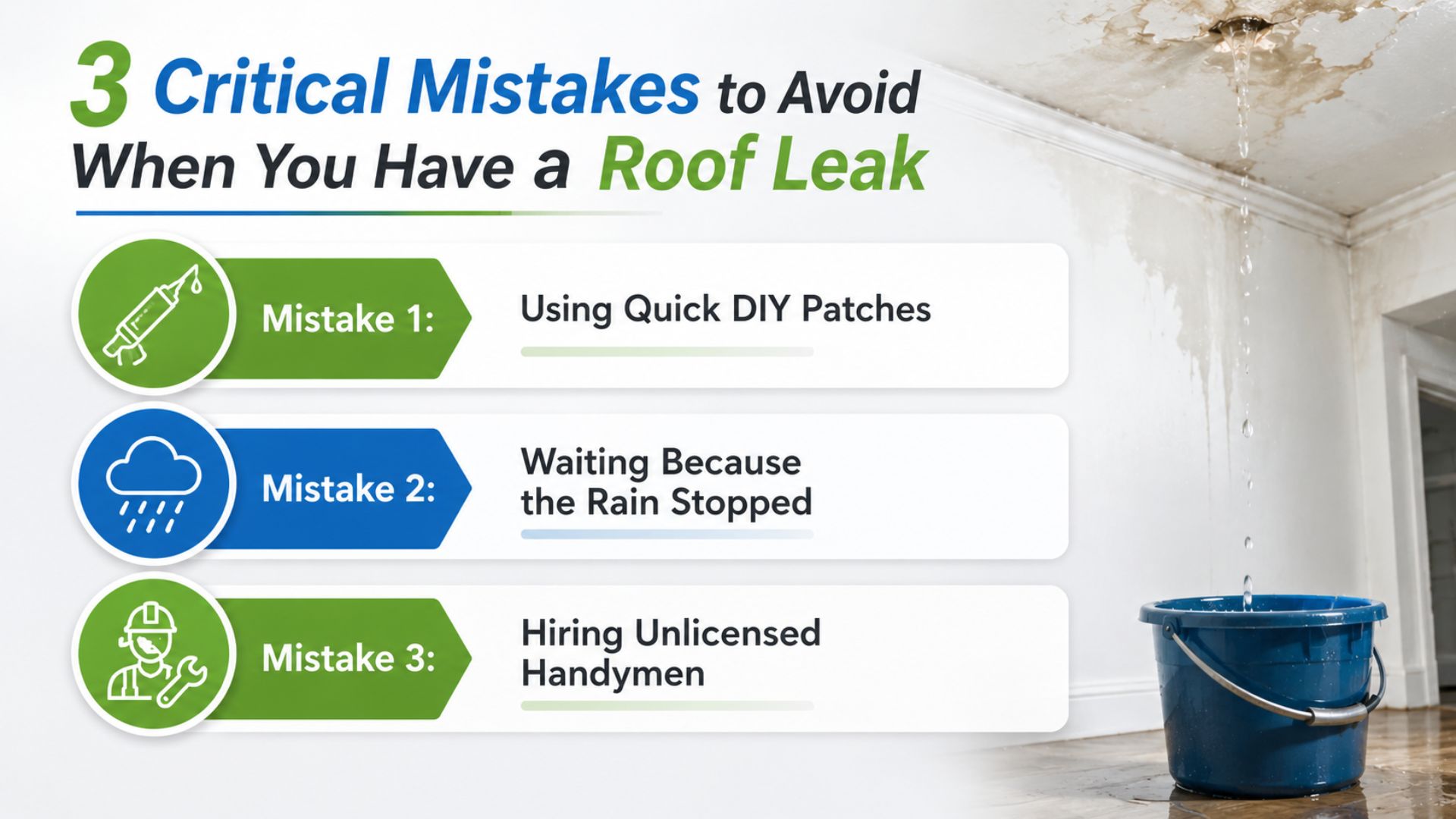
3 Critical Mistakes to Avoid When You Have a Roof Leak

Mistake 1: Using Quick DIY Patches

Silicone spray or sealant is fine for a temporary fix, but putting it over a cracked tile or rusted flashing will cause long-term trouble. Silicone breaks down quickly in the hot Australian sun. It traps water underneath, which makes metal rust faster and wood rot out of sight.

Mistake 2: Waiting Because the Rain Stopped

When the sun comes back out in Sydney, it is easy to forget about the leak. But the damage is still there. Every time it rains lightly, the wooden frame drinks up water. By the time the next heavy storm hits, the weakened wood can snap or collapse.

Mistake 3: Hiring Unlicensed Handymen

Roofing is highly skilled and dangerous work. Hiring a cheap, uninsured handyman who does not have roofing licenses can void your home insurance. If they get hurt on your property, or if their work causes worse flooding later, you will have to pay for it. Always make sure your contractor specializes in leaking roof repairs near me and has full insurance.

Why Quick Repairs Matter: Protecting Your Home’s Value

Your roof is the most important shield protecting your house. Fixing problems early gives you massive long-term benefits:

Big Savings: Spending a bit of money on preventative repointing roof tiles or gutter care saves you from a massive $15,000 bill to replace ruined internal plaster and structural timber down the road.

  • Family Health: Constant leaks create a dark, damp space where dangerous black mould grows inside your ceiling. This mould can cause breathing problems and asthma for children and pets.
  • Lower Energy Bills: A dry roof space means your home insulation works the way it should. If you want to keep your home cooler, combining your leak repair with a whirly birds installation helps push hot air and dampness out of your roof. Having whirly birds fitted helps your roofing materials last much longer by keeping the wooden supports completely dry all year.

Complete Resource Guide

To learn more about your specific roof issues, read our detailed guides written just for Sydney homeowners:

Easy Roof Inspection Guides

Roof Valley & Storm Prep

Skylight Repair & Waterproofing

Professional Gutter Care

Ventilation & Moisture Control

Conclusion: Act Before the Next Big Storm

A leaking roof will not fix itself. When the storm passes and the sun comes back out, the stains on your ceiling might dry up, but the broken tiles, blocked valleys, and structural damage are still there under your roof.

Do not wait for the next heavy Sydney storm to flood your home. Taking action today keeps your house, your things, and your family completely safe, warm, and dry.

If you think your roof has an issue, or if you want an honest check on a current leak, call the local team at The Sydney Roof Doctor. Our experienced, fully licensed team specializes in top-quality roof leak repair Sydney services that stand up to the toughest weather. Call us today to book your professional roof check.

Frequently Asked Questions

How urgent is a roof leak?
A roof leak is a true emergency. Even if it only drips during heavy storms, the hidden moisture continuously rots your timber beams, ruins your insulation, and grows dangerous mould. You should get any active leak looked at within 24 to 48 hours.
Can small roof damage be ignored?
No. A single cracked tile or a small rusty patch on your valley flashing might look tiny when it is dry, but it becomes an open highway for water during heavy storms. Small issues grow bigger over time due to weather changes, leading to much higher repair costs later.
How much do roof repairs cost in Sydney?
Minor fixes, like changing a few broken tiles, fixing loose flashing, or simple roof bedding and pointing repairs, usually cost between $350 and $950. Bigger jobs that need full valley replacements, skylight fixes, or high safety scaffolding can cost from $1,500 to over $4,500, depending on your roof type.
How long does a standard roof repair take?
Most targeted leaking roof repairs Sydney jobs can be completed in just one day. Changing a few tiles or sealing flashing might take 2 to 4 hours. Replacing an entire metal valley or re-doing the ridge tiles usually takes 1 to 2 full days of work.
Will my home insurance cover a roof leak?
Insurance usually covers damage from sudden storm events, like a tree branch breaking your tiles or hail damage. However, they will often reject your claim if the leak was caused by a lack of maintenance, like dirty gutters, old rusted valleys you ignored, or general wear and tear.

Leaking Skylight Repairs Sydney: The Complete Homeowner’s Guide

It usually starts with a single, rhythmic drip-drop against the floorboards during a classic Sydney afternoon downpour. You look up, hoping it’s just condensation, but the tell-tale brown ring forming around your skylight tells a different story.

A leaking skylight is one of the most frustrating roofing issues a homeowner can face. Because skylights are essentially a “hole” in your roof’s protective envelope, they are the first to fail when heavy rain hits. If left unaddressed, that minor drip can quickly escalate into ruined ceilings, mould growth, and structural timber rot.

At The Sydney Roof Doctor, we’ve seen how the harsh NSW climate, from scorching UV rays that perish seals to sudden East Coast Lows, takes a toll on even the highest-quality installations.

In this guide, we’ll break down why your skylight is failing, how to tell if you need a simple repair or a full replacement, and the immediate steps you should take to protect your home.

leaking skyylight

The Common Culprits: Why Skylights Leak in Heavy Rain

It’s easy to blame the glass, but the problem is rarely the pane itself. Skylights are complex systems that integrate directly with your tiles or metal sheeting. Here is why they usually fail:

1. Corroded or Improper Flashing

Flashing is the metal “skirt” that directs water away from the skylight and onto the roof surface. In Sydney’s coastal suburbs, salt air can accelerate corrosion. If the flashing was installed poorly, or if it has lifted due to thermal expansion, water will find its way underneath and directly into your light shaft.

2. Degraded Sealants and Gaskets

Skylights rely on high-grade rubber gaskets and silicone sealants to remain watertight. Over time, Sydney’s intense summer heat causes these materials to dry out, crack, and shrink. Once the seal is broken, water ingress is inevitable during the next storm.

3. Blocked Weepholes and Debris

Most modern skylights have “weepholes” designed to let internal condensation escape. If your roof is surrounded by gum trees, leaves and silt can block these drainage points. When water can’t get out, it backs up and leaks into your home.

4. Roof Tile or Shingle Failure

Sometimes, the skylight isn’t the problem at all. A cracked tile or a blocked valley nearby can allow water to track along the roof battens, only to drip through the skylight opening, making it look like the skylight is the culprit. This is where professional leak detection becomes vital.

Warning Signs You Should Never Ignore

Are you dealing with a minor nuisance or a roofing emergency? Look for these red flags:

  • Water Staining: Yellow, brown, or bubbling paint on the drywall around the skylight shaft.
  • Condensation Between Panes: If you see fogging inside the glass, the factory seal has likely failed, compromising the unit’s thermal and structural integrity.
  • Dripping During Wind: If it only leaks when the wind blows from a certain direction, it usually points to a flashing or “lapping” issue.
  • Musty Odours: A persistent damp smell in the room often indicates trapped moisture and active mould growth behind the plaster.

Step-by-Step: What to Do When the Drip Starts

If it’s currently raining and you’ve discovered a leak, don’t panic. Follow these steps to minimise the damage:

  1. Contain the Water: Place a bucket under the drip. If the water is running down the wall, pin a piece of string to the leak point and lead it into the bucket to act as a “wick.”
  2. Clear the Area: Move furniture, rugs, and electronics away from the splash zone.
  3. Check for Obstructions: If it’s safe and you have a low-pitched roof, check for visible debris (like branches or leaf build-up) around the top of the skylight that might be damming the water. (Never climb on a wet, slippery roof, leave this to the pros).
  4. Document the Leak: Take photos and videos of where the water is entering. This helps your roofing specialist diagnose the root cause faster.
  5. Call a Specialist: Contact a professional for leaking skylight repairs to prevent the damage from spreading to your ceiling joists.

Repair vs. Replacement: Which One Do You Need?

Many homeowners worry that a leak means a total replacement is required. That isn’t always the case.

ScenarioRecommended Action
Damaged or rusted flashingRepair: Flashing can often be replaced or resealed without removing the entire skylight.
Minor sealant crackingRepair: Scraping out old silicone and applying high-grade roofing sealant can add years to a unit.
Cracked glass or failed internal sealReplacement: If the glass itself is compromised or fogged, a new unit is usually more cost-effective.
Unit is 15+ years oldReplacement: Most skylights have a 10–20 year lifespan. If it’s old, a repair may only be a temporary band-aid.

leaking skylight repair

The True Cost of Delaying Leaking Skylight Repairs

It is tempting to put a bucket under the leak and “wait until next year.” However, skylight leaks are rarely stagnant; they get worse with every rain cycle.

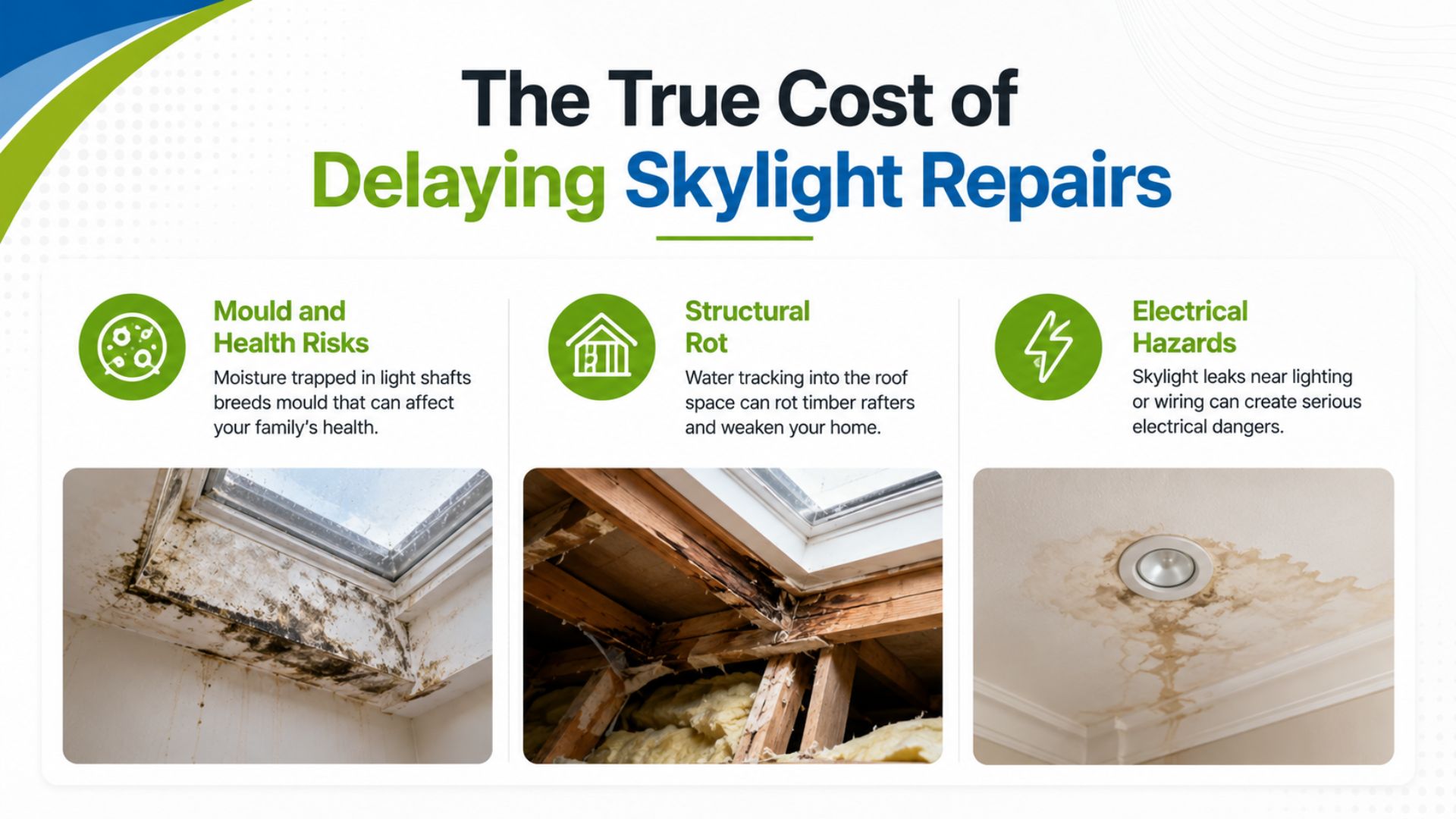
  • Mould and Health Risks: Moisture trapped in light shafts is a breeding ground for black mould, which can affect your family’s respiratory health.
  • Structural Rot: Water tracking into the roof space can rot the timber rafters that hold your roof up. Replacing a rafter is significantly more expensive than fixing a seal.
  • Electrical Hazards: Many skylight shafts are located near recessed lighting or ceiling fans. Water and electricity are a dangerous combination.

Professional vs. DIY: Why the “Quick Fix” Often Fails

We often see “repaired” skylights that have been smothered in hardware-store silicone. While this might stop the leak for a week, it often creates a “water dam” that eventually causes more severe damage.

Why hire a professional like The Sydney Roof Doctor?

  • Correct Materials: We use UV-stable, industrial-grade sealants designed for the Australian sun.
  • Structural Knowledge: We understand how water moves across different roof profiles (Kliplok, Corrugated, or Terracotta tile).
  • Warranty: Our repairs come with the peace of mind that if it leaks again, we’ll be back to fix it.

Frequently Asked Questions

Q. How urgent is a skylight leak?

Extremely urgent. Even if the leak stops when the rain stops, the moisture trapped in your roof structure continues to cause damage. It should be inspected within 24–48 hours of discovery.

Q. Can a leaking skylight be fixed from the inside?

Generally, no. Fixing a leak from the inside only hides the problem; it doesn’t stop the water from entering your roof. Repairs must be done from the exterior to ensure the roof remains watertight.

Q. How much do skylight repairs cost in Sydney?

Costs vary depending on the cause. A simple reseal and clearing of debris might cost a few hundred dollars, while complex flashing replacement or unit upgrades will be higher. We provide transparent quotes after a physical inspection.

Q. Does my home insurance cover skylight leaks?

Usually, insurance covers “sudden and accidental” damage (like a branch falling through the glass during a storm). However, leaks caused by “wear and tear” or lack of maintenance are often excluded.

Q. How long does a typical repair take?

Most skylight repairs can be completed within 2–4 hours, depending on the complexity of the flashing and roof access.

Protect Your Home with The Sydney Roof Doctor

Don’t wait for the next Sydney storm to test your roof’s limits. Whether you’ve noticed a small damp patch or a steady stream of water, The Sydney Roof Doctor is here to help. We specialise in Roof Leak Repairs in Sydney and have saved countless homeowners from the stress of structural water damage.

Stop the drip before it becomes a flood.

[Contact The Sydney Roof Doctor Today for a Professional Inspection]

Leaking Roof? Don’t Wait: 5 Red Flags You Can’t Ignore

That little drip you notice while trying to fall asleep? 

Or the weird yellow ring creeping across your ceiling that you swear you’ll deal with “tomorrow”?

Here’s the catch: tomorrow is when the problem grows legs. A leaking roof isn’t just a nuisance. It’s like a sneaky, silent assassin for your home. I’ve spent a decade writing about this stuff, so trust me when I say: waiting is the worst move you can make.

Why You and Your Roof Should Act Now?

You might think it’s minor. A little stain here, a light drip there. But here’s the thing: that’s how chaos starts. Untreated leaks become mould, sagging ceilings, structural wreckage… and suddenly, you’re googling “leaking roof repairs near me” in panic mode.

Leaking Roof Repairs Near Me

Here’s how to spot trouble before it turns ugly:

The 5 Red Flags You Can’t Ignore

Spotting the signs early is everything. These five red flags are your early-warning system. If you notice any of them, don’t wait! Call for Sydney’s best leaking roof repair service provider immediately.

  • Ceiling Stains or Watermarks: Those faint brown rings are more than cosmetic. They’re proof that water has already found a way through your roof layers.
  • Peeling Paint or Bubbling Walls: If your walls or ceiling paint start to bubble, that’s moisture working from the inside out.
  • Persistent Damp Smells: Musty odours are mould and mildew announcing their arrival. Once mould gets in, it’s tough to get rid of.
  • Sagging Roof or Ceiling Areas: This isn’t just a leak problem. It’s a structural safety concern that needs immediate action.
  • Blocked or Overflowing Gutters: Clogged gutters push water back into your roof system. This creates leaks that sneak into your home.

Those aren’t just red flags. They’re your roof screaming for help.

Sydney Weather: The Other Side of This Story

  • Hot, dry spells followed by wild rain? That thermal shock cracks tiles fast.
  • Coastal humidity plus a leaky roof = breeding ground for mould. No joke.

If you’re searching for the right leaking roof repair service provider in Sydney, you’re right to want fast, local care. The Sydney Roof Doctor promises service in 24-48 hours, tarp-ready, ASAP, to stop damage in its tracks.

Why Choose The Sydney Roof Doctor?

In the game since 1986. That’s decades of local know-how applied to both homes and commercial sites.

Emergency response + 24/7 contact. When leaks hit at awkward hours, availability matters.

Tailored, not templated. They customise the roof and the problem, not just the postcode.

If you’re hunting for the best professional leaking roof repair service, make a checklist to filter your search fast.

Leaking Roof Repairs Sydney

The checklist:

  • Fast mitigation, then diagnosis. The good teams stop active ingress first, then trace the source properly instead of just patching the symptom.
  • Source-based fixes. Expect attention to flashings, valleys, pointing and sarking. Because lasting repairs start where water actually gets in.
  • Capability across roof types and skylights. If skylights are in play, you want a team that does those every week, not once a year.

Wrap-Up: You’ve Got This & So Does Your Roof

Here’s what really matters: 

Stop downplaying a little drip. Have the guts to act fast, tap “leaking roof repairs near me“, and make that call. The weather’s extreme, damage spreads, and delays cost big.

Fixing early? That’s smart. That’s peace of mind. That’s you being a proactive homeowner, winning.

And if you’re in Sydney, you don’t have to look far. The Sydney Roof Doctor has been rescuing homes from leaks for over 25 years, with same-day responses, free inspections and work guaranteed to last.

Let’s keep those roofs tight and homes drama-free!

FAQ: Because You’re Probably Wondering

Q 1. Is one small stain really a problem?

Yes. If water made it past your roof, it’s already damaging layers you can’t see.

Q 2. Can I fix it myself?

Temporary patches? Maybe. Permanent solutions? That’s where experts with tools and experience matter.

Q 3. Why do skylights leak so often?

Because flashing around them weakens over time. Good pros fix skylights weekly. It’s a common job.

Q 4. How fast will a team come?

Emergency services usually aim for same-day response and proper repairs within 24–48 hours.

Q 5. Why keep saying “Leaking Roof Repairs Sydney”?

Because being local matters. Sydney weather is unique, and you want a team that understands it.

Common Roof Repairs: A Guide To Fixing Roof Leaks

Roof leaks can be a homeowner’s nightmare, causing not only structural damage but also frustration and inconvenience. However, understanding common roof repairs and how to fix roof leaks can turn the tables in your favor. 

In this guide, we will walk you through the essential steps to identify, address, and prevent roof leaks. By the end of this journey, you’ll be equipped with the knowledge and confidence to safeguard your home from the relentless drip-drip of a roof leak. 

Tips For Fixing Roof Leaks

1. Understanding Roof Leak Causes

First and foremost you must understand the causes behind roof leaks, as it can be as tricky to pin down as the drop in temperature when you head south. Start by understanding the usual suspects, which could be damaged shingles, dodgy flashing, and general wear and tear.

In places with harsh weather like Australia, your roof faces tough challenges. Intense sun, heavy rain, and hailstorms can harm your roof’s protective layers. Over time, this can create cracks or damage on your roof, allowing water to get inside your home.

2. Essential Roof Leak Detection

Detecting a leaking roof can be challenging, but homeowners can rely on a straightforward checklist of signs, both inside and outside their homes. Inside, they should keep an eye out for water stains on the ceiling or walls that are clear indicators of a potential problem. If you notice discolored patches or areas that seem to sag, it’s time to grab a ladder. Additionally, checking for mold or mildew growth, especially in hard-to-reach corners, is essential.

Outside, homeowners should inspect the roof. Loose or missing shingles can allow water to seep in rapidly. You should also examine for cracked or damaged flashing around vents and chimneys, common sources of leaks. Lastly, you should remember to check the gutters, as clogs can result in water backup on the roof, leading to various issues.

3. DIY vs. Professional Repairs

Homeowners can determine whether they’re dealing with a minor issue they can handle themselves or if it’s time to seek professional help. Sometimes, a bit of DIY can do the trick, but for larger problems, it’s best to leave it to the experts. For minor leaks, such as a single damaged shingle or a small crack, homeowners can usually roll up their sleeves and take care of it themselves. It’s an opportunity to tap into their inner handyman, and it can save them some money. However, safety should always come first – using a sturdy ladder and wearing non-slip shoes is essential.

On the other hand, if there’s a major leak, multiple damaged areas, or a complex issue like a damaged chimney flashing, it’s time to reach out to the professionals. Roofing professionals possess the necessary skills, experience, and safety equipment to handle these types of repairs safely and effectively.

4. Step-by-Step Repair Instructions

For those who enjoy tackling DIY projects, here’s a step-by-step breakdown of the repair process. First and foremost, prioritize safety, as roof work comes with its fair share of risks, so ensure you have the necessary safety gear on hand. This includes a sturdy ladder, non-slip shoes, and a safety harness – these are absolute musts. Once you’re geared up, gather your tools and materials. You’ll need roofing cement, spare shingles, a hammer, roofing nails, a pry bar, and a putty knife to get the job done right.

Now, let’s get to work:

Step 1: Identify the Leak Source: Trace the leak back to its source, both inside and outside the house.

Step 2: Prepare the Area: Clear away debris and make sure the area is clean and dry.

Step 3: Lift the Damaged Shingle: Use your pry bar to carefully lift the damaged shingle, exposing the problem area.

Step 4: Apply Roofing Cement: Apply a generous layer of roofing cement to the damaged area and press the shingle back into place.

Step 5: Secure the Shingle: Secure the shingle with roofing nails and cover the nail heads with more roofing cement.

Step 6: Check Your Work: Give it a once-over to ensure everything’s secure and watertight.

Step 7: Monitor the Repair: Keep an eye on the repaired area to make sure the leak is properly sealed.

Remember, this is just a basic guide for minor repairs. If you’re unsure about anything, it’s best to consult a professional for roof repairs.

5. Roof Leak Prevention

Prevention is the name of the game. Keep reading and get to know how to maintain your roof, so you don’t have to deal with leaks down the track. Performing routine inspections and showing a little tender loving care can significantly prolong your roof’s lifespan and keep your wallet a bit thicker.

Regular Inspections: Schedule regular inspections – twice a year is a good rule of thumb. Look for signs of wear and tear, damaged shingles, or loose flashing.

Gutter Maintenance: Keep those gutters clean! Clogged gutters can cause water to back up onto your roof, which further leads to leaks.

Trim Overhanging Branches: If you’ve got trees close to your roof, trim the branches. This is because falling branches or debris can damage your roof.

Proactive Repairs: When you spot a minor issue, address it promptly. Don’t wait for it to become a major headache.

6. When To Consult A Professional

While DIY is commendable, there are some leaks that are beyond our expertise. In such cases, it is best to reach out to the professionals. They’ve got the know-how and the right equipment to tackle the job safely and effectively.

If you’re dealing with any of the following, it’s time to call in the experts:

  • Multiple roof leaks
  • Extensive damage to your roof
  • Complex issues like damaged flashing around chimneys or vents
  • Roofing material replacement
  • A need for a complete roof overhaul

Professionals will conduct a thorough assessment, provide a detailed repair plan, and ensure that your roof is in top-notch condition.

7. Cost Estimates and Budgeting

It is important to know about the financial aspects of roof repairs and replacement. Homeowners generally aim to make cost-effective choices. Knowing the right estimates can empower them to make prudent financial decisions.

For minor roof repairs, such as fixing a small hole or replacing a few shingles, homeowners can expect a relatively budget-friendly expenditure. Typically, these repairs can be managed as DIY projects, primarily covering costs for materials like roofing cement and shingles.

However, if a leak is more extensive or necessitates professional assistance, the expenses may escalate. Factors impacting costs include the severity of the leak, the extent of damage, the type of roofing material, and labor fees. On average, professional roof repair costs can range from a few hundred to several thousand dollars.

It’s vital to bear in mind that the expense of addressing a roof leak is often significantly lower than dealing with the consequences of neglecting a major leak. Costs related to water damage, mold removal, and structural repairs can accumulate into a considerably higher bill. Therefore, homeowners should view roof repairs as an investment in the long-term health and resilience of their homes.

8. Materials and Tools

Before individuals get started, they’ll require the appropriate equipment. It’s essential to ensure that you have the complete set of gear at your disposal before commencing any work.

Roofing Cement: A reliable sealant for patching up cracks and gaps.

Spare Shingles: Have a few on hand in case you need to replace damaged ones.

Hammer: A trusty tool for securing roofing nails.

Roofing Nails: These are specially designed for securing shingles and flashing.

Pry Bar: Essential for lifting and removing damaged shingles or flashing.

Putty Knife: Useful for spreading roofing cement evenly.

Ladder: Ensure it’s sturdy and positioned on solid ground.

Safety Gear: Non-slip shoes, gloves, and a safety harness if you’re working at heights.

Having these materials and tools ready before you start your repair project will save you time and ensure a smoother process.

Conclusion:

Homeowners now have a better understanding of how to identify, tackle, and even prevent roof leaks, whether they choose the DIY route for minor issues or opt for professional assistance with more complex problems. By prioritizing safety, regular inspections, and timely repairs, homeowners can extend the life of their roofs, safeguard their homes from water damage, and make informed financial decisions when it comes to roofing repairs. Remember, a well-maintained roof is not only an investment in your property’s longevity but also in your peace of mind. 

Is Your Roof Leaking? Here Are The Common Reasons Of Leaking Roofs

Regular maintenance of the house is essential to ensure the structure remains intact. The roof is no different; routine maintenance of the roof is equally important. Overlooking the requirement of roof repairing or delaying the maintenance inspection can result in bigger and costlier issues. There are many other reasons why one must be involved in routine maintenance since avoiding it can be more expensive, affect the property value, and worsen matters.

Regular inspection helps one decide regarding roof repairs in Sydney, often due to the unpredictability of weather can lead to severe leaks, growth of moss, mildew, blistering, clogged gutters, floods, and deterioration of the structure of the house, and more.

This article goes on to explain the common reasons for leaking roofs.

Common reasons for a leaking roof

There are many reasons for a leak to develop in the roof as listed here:

  • Aging roof: One of the main reasons that your roof is leaking is because the roof is very old; like 10 to 20 years old. One of the main issues, as time passes, is that the roof materials will deteriorate since it is always exposed to harsh weather conditions. It is best to arrange a roof inspection in the case where your roof is over 20 years old.
  • Clogged gutters: Leaves and other debris if not cleared from the roof can result in a major problem over time. It will affect the draining of the gutters and can also result in them getting clogged. Clogged gutters are bad news for any house since this will result in an overflow of water and also cause damage to the roof that would eventually develop into a leak.
  • Poorly designed flashing often results in leaks: Similarly, bad workmanship also causes the roof to deteriorate faster than expected, resulting in big leaks.
  • Box gutters are designed to efficiently drain the water: However, unlike the other gutters, if the installation is done accurately there is a big risk of overflow outside the building and at times a leak developing on the roof.
  • Damaged roof flashing: Damage to the roof flashing or mistakes made during the installation process often cause damage to the edge of the valley gutters. This results in water spilling into the cavities as well as a leak.
  • Corrosion: Rust and corrosion that the homeowners fail to spot either due to lack of inspection or not seeking help from the professionals often result in gaping holes. This often means big leaks in the roof.
  • Moisture build-up: In the case where moisture builds up on the roof sheets, it can gradually affect the internal spaces. This will gradually lead to water damage and big leaks.
  • Pest infestation: Pests can cause more damage than you can imagine. A failure to detect them in time will result in them chewing through the insulation, plumbing, etc., and cause leaks.
  • Housing installation and skylights: Every house tends to require roof penetrations of some kind like chimneys, vents pipes, skylights, exhausts, etc. If not installed correctly or if the installation is very old such penetrations can be quite problematic.

Leaking Roof Repairs Sydney image

Benefits of seeking professional roof maintenance

The Sydney Roof Doctor offers leaking roof repairs, gutter cleaning, and roof maintenance services in Sydney. We are one of the leading roof repair companies in Australia with over 25 years of experience. It is usually a good idea to trust the professionals for roof repair and inspection since they have the necessary skills and knowledge for this. We offer fully accredited and licensed roof repairs with a 100% satisfaction guarantee. We have the expertise to stop all types of leaks.