
Hot building? You’re not alone. Many Australian buildings trap heat in the roof space. By late afternoon, it feels unbearable. The air sits. The ceiling radiates heat. Energy bills climb.
That’s where the Whirly Birds installation comes in. Simple idea. Big impact. These roof ventilators spin with the wind and pull hot air out. No power needed.
In this guide, we’ll break it down. What they are. When you need them. And how they’re installed. No fluff. Just clear, practical insight you can actually use.
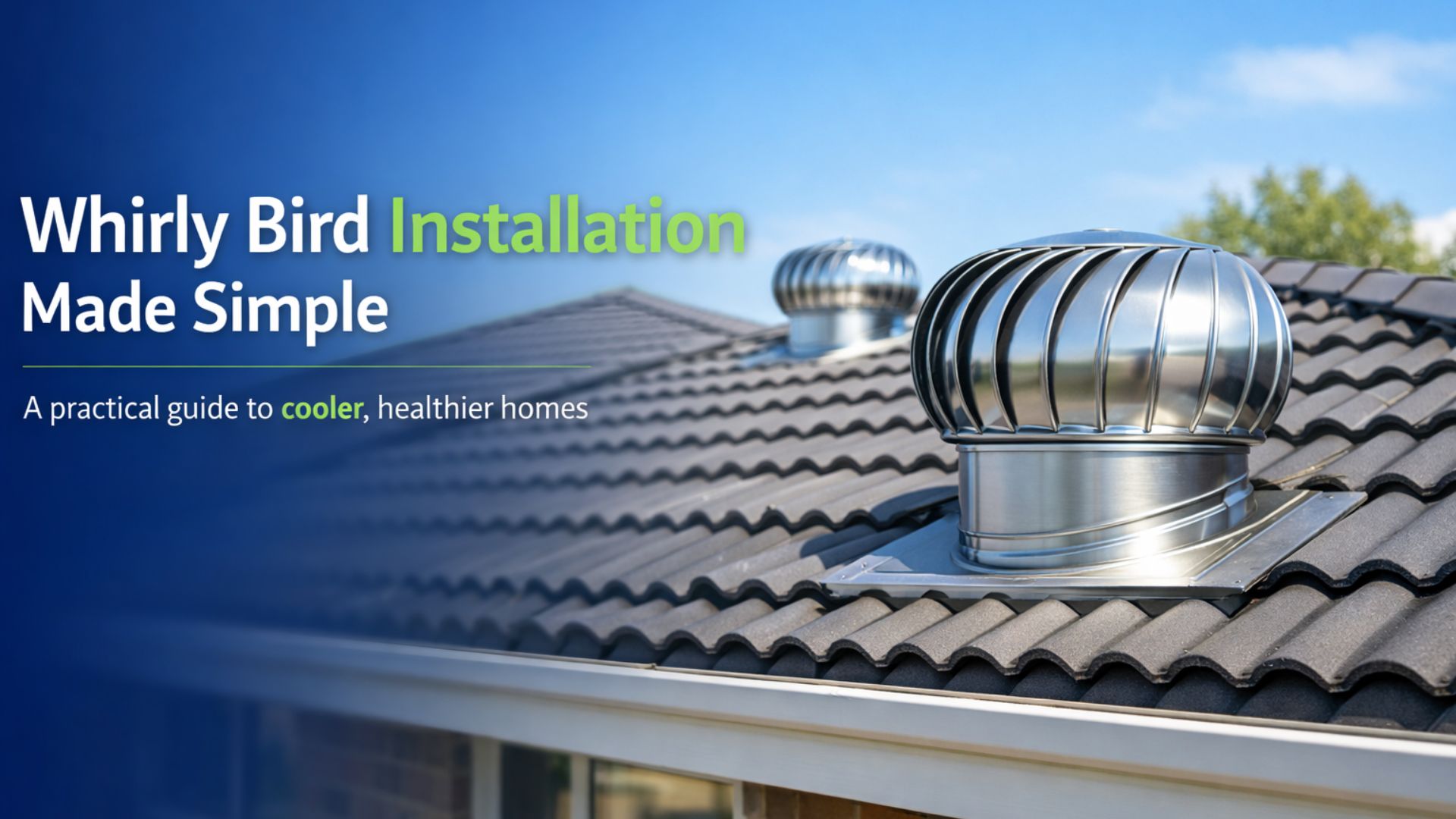
What Are Whirly Birds and Why They Matter
Think of a whirly bird as your roof’s exhaust fan. It sits on top and spins with the breeze. As it turns out, it pulls hot, stale air out of your roof space.
Sounds simple. It is. But the results? Noticeable.
Here’s what they help with:
- Less heat indoors. Your rooms stay cooler, especially upstairs
- Better airflow. No more trapped, heavy air
- Lower energy use. The air conditioner system doesn’t have to work as hard
- Protection from moisture. Helps prevent mould and damp issues
In Australia’s climate, heat builds fast. Without ventilation, it has nowhere to go. That’s the real problem.
When Should You Consider Whirly Birds Installation
Not sure if you need one? Look for the signs.
- Your home stays hot even after sunset
- Cooling bills feel higher than they should
- The ceiling feels warm to the touch
- There’s a musty smell in certain rooms
- You’ve noticed condensation or damp patches
Sound familiar? Then your roof probably isn’t breathing properly.
Many older Australian homes weren’t built with modern ventilation in mind. Over time, that becomes a comfort issue. And a cost issue.
Step-by-Step Whirly Birds Installation Process
Let’s walk through how it’s actually done. No guesswork. No shortcuts.
- Roof inspection and placement planning
First, the roof is assessed. Size matters. So does layout. Placement is planned carefully to get the best airflow.
- Marking and cutting the roof opening
A clean opening is marked and cut. Precision here is critical. Too loose, and you risk leaks.
- Securing the base and flashing
The base is fitted and fixed into place. Flashing is added to keep water out. This step protects your roof.
- Installing the turbine head
The spinning unit is attached. It must rotate freely. No resistance.
- Sealing and weatherproofing
Every edge is sealed. Properly. This is what keeps your home dry during heavy rain.
- Final testing and airflow check
The unit is tested. Airflow is checked. Everything must work smoothly before the job is done.
It’s a straightforward process. But every step matters.
Why Professional Installation Makes a Difference
Here’s the truth. This is not just a cut-and-fit job.
Get it wrong, and you risk:
- Water leaks
- Poor airflow
- Structural damage
That’s why professional installation matters.
An experienced roofer knows:
- Where to place units for maximum effect
- How to seal properly against the Australian weather
- How to work safely without damaging the roof
Done right, it works quietly in the background. Done wrong, it causes problems.
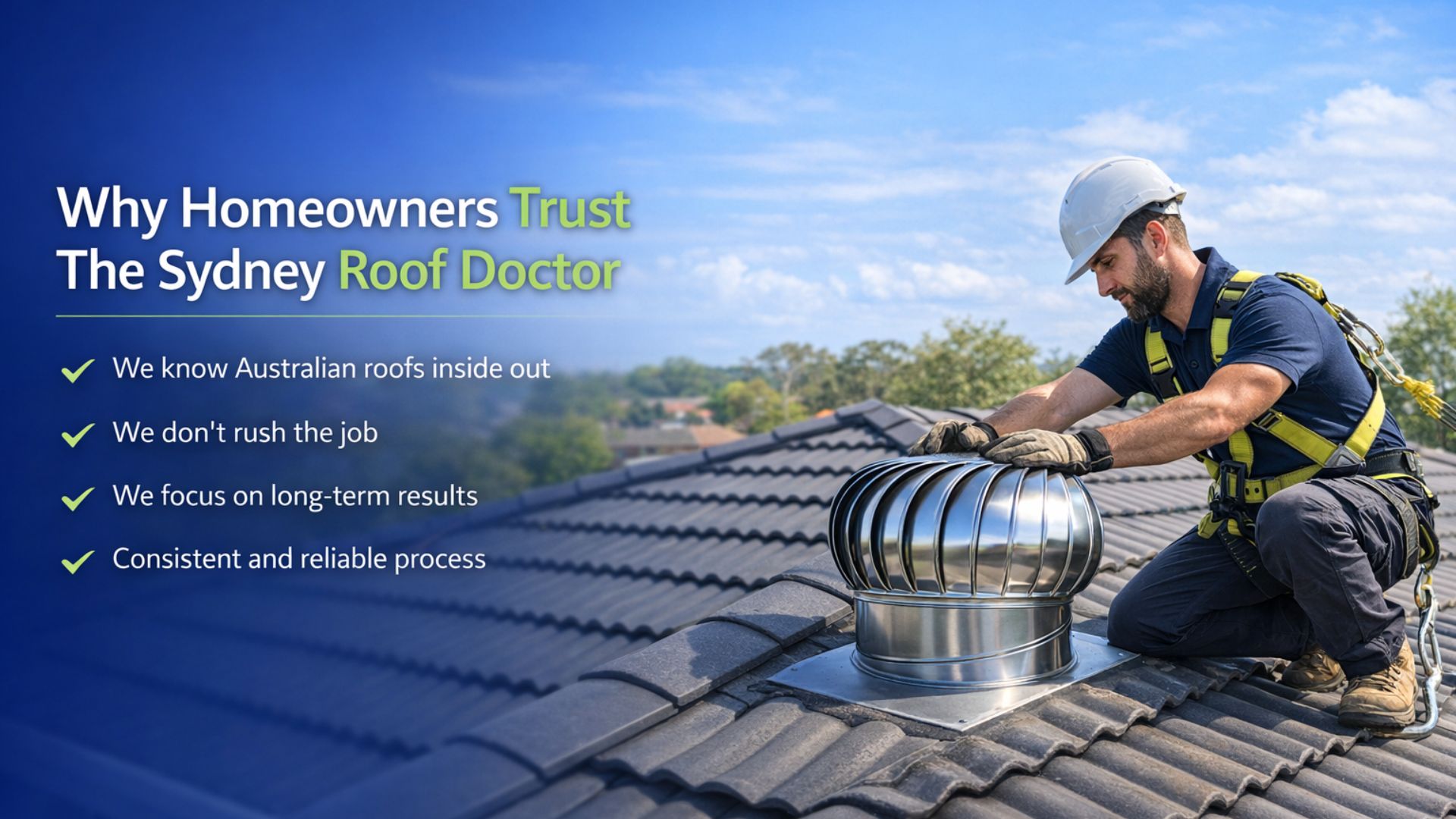
Why Homeowners Trust The Sydney Roof Doctor
When it comes to Whirly Birds installation, experience shows.
The Sydney Roof Doctor understands local conditions. Heat. Rain. Wind. All of it.
Homeowners rely on us because:
- We know Australian roofs inside out
- We don’t rush the job
- We focus on long-term results, not just quick repairs
- Our process is consistent and reliable
It’s not about installing a product. It’s about getting the outcome right.
Frequently Asked Questions
Q. How many Whirly Birds do I need?
It depends on your roof size and layout. Most homes need more than one for proper airflow.
Q. How long does installation take?
Usually, a few hours. It can vary depending on the roof type and access.
Q. Do Whirly Birds work in winter?
Yes. They help remove moisture and keep air moving year-round.
Q. Can they be installed on all roof types?
Yes, in most cases. Tile and metal roofs are both suitable with the right approach.
Q. Are Whirly Birds noisy?
No. When installed correctly, they run quietly. Noise usually points to a problem.
Conclusion
A hot, uncomfortable home doesn’t have to be the norm. Often, the issue starts on the roof. And the repair is simpler than you think.
Whirly Birds installation helps your home breathe. It reduces heat. Improves airflow. And makes everyday living more comfortable.
But the real difference comes from doing it properly. That’s where experience matters.
If you’re noticing the signs, it might be time to act. The Sydney Roof Doctor can assess your roof and guide you toward a solution that actually works. Not just now, but for the long run.