
How to Find a Roof Leak Inside Your Ceiling (Before Major Storm Damage Hits)

There is nothing quite like sitting on your couch during a wild Sydney storm only to hear that sudden, dreaded tap-tap-tap on the floorboards. You glance up, squint in the dim light, and spot a faint dark shadow spreading across your ceiling plaster, or water steadily beading around a downlight.

Few things trigger instant panic like water inside your home. What looks like a harmless 10-cent ring on your Gyprock can quickly become a ceiling-drop nightmare once wet weather really settles in.
Water rarely moves in a straight line. Where it drops into your room is almost never where it entered the roof. In this walkthrough, we will show you how to find a roof leak from inside your ceiling, read the earliest warning signs, track the leak source safely without getting up on a ladder, and know when you need professional help before the next heavy front sweeps across NSW.
How Can You Tell If Your Ceiling Has a Roof Leak?
Ceiling plasterboard works just like a sponge. By the time water seeps through paint and starts falling into a room, moisture has usually been sitting inside your roof cavity for days. Here is what to keep an eye out for.
Brown or Yellow Stains on the Ceiling
The giveaway for a leaking roof is an uneven yellowish-tan or rusty brown ring spreading outward across your plaster. Rainwater picks up dust, insulation soot, and wood tannins from your roof trusses, depositing them on top of the ceiling sheet. Even if that patch feels dry to touch on a clear afternoon, water has already breached your home.
Bubbling Paint or Peeling Plaster
Modern ceiling paint has enough elasticity to hold a pocket of water behind it for quite a while. That creates soft, pillow-like blisters or sagging paint bubbles. Plaster tape along sheet seams starts curling up, and dried paint eventually flakes away, revealing powdery, crumbling gyprock underneath.
Water Dripping During Heavy Rain
If water is dripping during bad weather, you have an active breach. Watch along cornices, joints, light fittings, and pendant drops. Sometimes it only drips when the wind blows from a certain angle, but even a temperamental leak means the roofing envelope has failed somewhere.
Musty Smells and Damp Patches
Warm roof spaces mixed with trapped moisture create an instant breeding ground for mould. If an upstairs bedroom or hallway smells stale, earthy, or damp, even when you cannot see a single drop of water, moisture is almost certainly building up directly above your head.
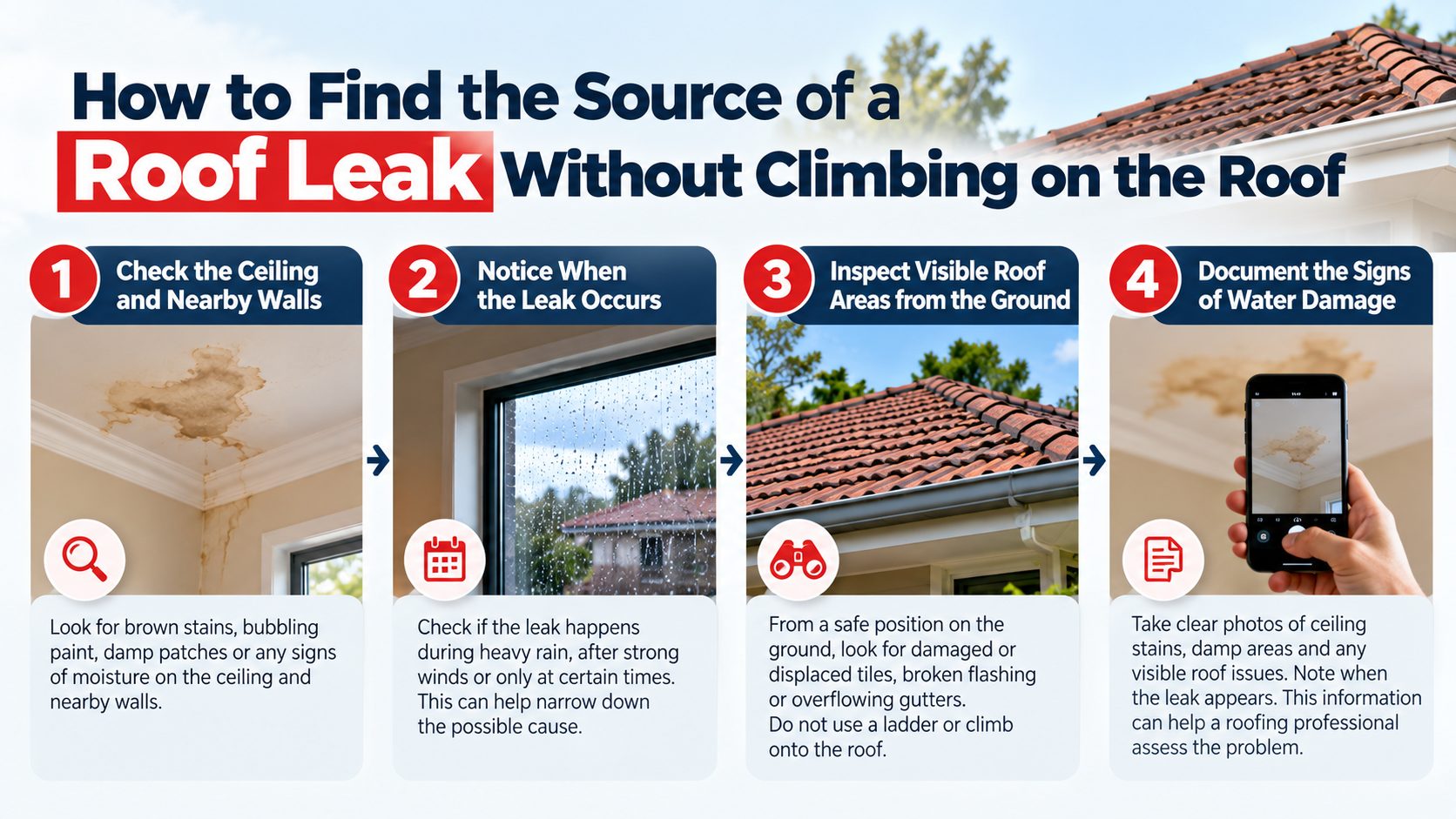
How to Find the Source of a Roof Leak Without Climbing on the Roof
Getting up on a wet, slippery roof is simply not worth the emergency room visit. Aside from the danger of falling, walking blindly on wet tiles often cracks them, creating five new leaks in the process. You can safely track most issues right from the ground.
Step 1: Check the Ceiling and Nearby Walls
Note down the exact spot where the ceiling looks worst, but do not stop there. Inspect adjoining partition walls, bulkheads, and cornices. Rainwater frequently hits an angled rafter, runs along electrical conduit or plumbing pipework, and travels metres sideways before finding a plasterboard joint to drip through.
Step 2: Notice When the Leak Occurs
Timing gives away the culprit:
- Dripping immediately in light rain: Often points to broken tiles or missing ridge mortar directly above that zone.
- Leaking only during stormy, high-wind downpours: Likely means wind-driven rain is forcing its way under valley irons, loose flashings, or side-laps.
- Continuing to drip long after the rain stops: Saturated ceiling insulation batts are acting like a soaked sponge, slowly draining down for hours.
Step 3: Inspect Visible Roof Areas from the Ground
Grab a pair of binoculars and walk the boundary of your block on clear ground. Scan the roofline uphill from the damp ceiling mark:
- Check for shifted, chipped, or missing terracotta or concrete tiles.
- Look for tree leaves and gumnuts packing out valley channels.
- Inspect lead or colorbond flashings around vents, chimneys, and skylight edges.
- Look for uplifted iron sheets or loose screws along metal roofs.
Step 4: Document the Signs of Water Damage
Take clear photos and videos of the ceiling marks, the bucket catches, and any exterior flaws you see through your lens. This helps roofers quote accurately and gives you solid proof if you need to submit an insurance claim for storm-related ingress. Our roof leak repair checklist for Sydney suburbs is a handy reference while you inspect.
What Causes a Roof to Leak During a Storm?
Sydney weather has a habit of swinging wildly from baking sun to violent hailstorms and East Coast Lows. These sudden changes test every weak point on your roof. For a wider breakdown, see our guides to the common causes of roof leaks in Sydney homes and why your roof leaks in severe storms.
Cracked or Displaced Roof Tiles
Whether from thermal expansion, stray tree limbs, or hail impacts, tiles crack easily. Gusting winds can also rattle loose tiles out of place, letting sheets of rain bypass the tiles completely.
Damaged Flashing and Roof Valleys
Flashing seals the joints where roof planes meet walls, chimneys, and valleys. Over time, metal flashings crack from thermal movement, sealants degrade in the harsh UV light, and steel valley trays rust through. When that happens, storm runoff dumps right into the ceiling cavity. Rusted-out valleys are usually fixed for good with roof valley replacement.
Blocked Gutters and Downpipes
When gutters fill with twigs and silt, water cannot get away fast enough. It backs up beneath the eaves, pools over the fascia, and spills backwards over ceiling battens. Booking regular Sydney Gutter Cleaning helps keep water moving off your home rather than inside it.
Loose or Damaged Metal Roofing Components
On corrugated and Colorbond® roofs, rubber sealing washers dry out and perish under the Australian sun, allowing rain to follow screw threads down into the timber. High winds can also pull up loose flashing ends or open sheet laps.
Ageing Roof Materials
Cement bedding and flexible pointing along ridge caps eventually crumble. Hairline gaps soak up rain like blotting paper. If your home is older, professional roof bedding and pointing can re-point your ridges and reinforce older tile roofs against wild weather. Not sure which one you need? Read our guide to roof bedding vs pointing.
What Should You Do If You Discover a Roof Leak Before a Storm?
If heavy rain is on the forecast and water has already found its way into your ceiling, quick triage makes all the difference:
- Move valuables: Clear rugs, timber furniture, and power boards away from the wet zone. Cover bulky furniture with plastic drop sheets.
- Set up a bucket: Put a solid bucket underneath the drip. Lay an old towel in the bottom so you don’t have to listen to loud dripping sounds all night.
- Watch the power: If moisture is anywhere near light switches or downlights, do not touch them. Turn off the lighting circuit on your switchboard right away.
- Relieve ceiling weight: If plaster is noticeably sagging or bowing, grab a bucket and gently poke a small hole in the centre of the bulge with a screwdriver. Draining the pooled water in a controlled stream stops the whole sheet from collapsing into your room.
- Call for help: Buckets only catch the mess; they don’t fix the problem. Reach out to a licensed roof specialist to seal the leak properly. Our guide to emergency roof leak repairs explains what to expect.
When Should You Call a Professional for Roof Leak Repairs in Sydney?
Slapping silicone over wet tiles between showers almost never lasts. It usually just traps moisture where it does more harm. Call in the pros when you notice:
Active Leaks and Recurring Ceiling Stains
If a ceiling patch darkens every time clouds roll in, your rafters and battens are staying damp. That sets the stage for wood decay and termite activity.
Visible Roof Damage After a Storm
Hail and heavy wind can dislodge ridge tiles or bend flashings out of alignment. An experienced roofer knows how to check hidden overlaps and valleys that you cannot see from the ground.
Sagging Ceilings and Persistent Moisture
When gyprock gets soaked, its paper lining tears away from screw fixings. That ceiling becomes a hazard. A professional can assess whether the lining can be dried out or needs immediate replacement.
Why Professional Assessment Matters
Licensed roofers have the harness kits, access equipment, and trade knowledge to trace leaks back to their real point of entry. If you are dealing with active leaks around Sydney, see our roof leak repairs service or schedule professional Roof Repairs and Maintenance with The Sydney Roof Doctor Team to get the issue sorted before the weather turns worse.
Can a Small Roof Leak Turn Into Major Storm Damage?
Water ingress is progressive. What begins as a nuisance drip soon turns into an expensive structural mess:
| Ingress Stage | Roof Cavity Impact | Inside Your Living Space |
|---|---|---|
| Early Stage | Saturated insulation batts; damp timber battens | Faint yellowing on plaster; faint musty odour |
| Mid Stage | Softening gyprock cores; corroding nails and screws | Blistered paint; sagging cornice lines; peeling joint tape |
| Severe Storm | Fungal timber rot; weakened ceiling framework | Collapsed ceiling sheets; black mould; shorted circuits |
Ceiling and Wall Damage
Plasterboard loses strength when wet, pulling loose from screw heads. Water often trickles into wall cavities too, staining baseboards and warping timber framing.
Moisture in Insulation and Timber
Glasswool and polyester batts hold water for weeks in poorly ventilated attics. That trapped dampness rots structural rafters and attracts timber pests like subterranean termites.
Mould Growth and Deteriorating Materials
Mould spores germinate within 24 to 48 hours in damp roof spaces. Once black mould takes hold in insulation and air conditioning ducts, it compromises the air quality throughout your entire home.
Why Early Repairs Matter
Swapping out three cracked tiles or resealing an apron flashing takes little time and costs very little compared to stripping out mouldy ceilings and rewiring water-damaged circuits.
Frequently Asked Questions About Leaking Roofs
How Do I Know If Water Is Coming Through My Roof?
Look for watermarks on the ceiling, peeling paint, or dampness around cornices during rain. If the stain darkens after downpours and dries out on hot days, the problem is your roof, not your plumbing.
Can a Roof Leak Occur Without Visible Ceiling Damage?
Yes. Rainwater can sit inside thick ceiling batts or run down external wall cavities without showing up on your ceiling. Strange musty smells, rusted shelf brackets, or damp carpet along skirting boards are common warning signs.
Why Does My Roof Leak Only When It Rains Heavily?
Gentle showers run straight down the pitch into gutters. But during heavy downpours or wind-driven storms, gutters overflow, rain gets forced under tile laps, and shallow flashings get overwhelmed.
Should I Repair a Leaking Roof Myself?
It is not recommended. Roofs are steep, slippery, and fragile. Stepping on the wrong spot cracks tiles, and silicone patches put over damp surfaces fail quickly. Licensed roofers carry the right insurance, safety gear, and trade warranties.
How Quickly Should a Leaking Roof Be Repaired?
Get it looked at as soon as possible. Moisture builds up with every shower, degrading your timbers and increasing the risk of plaster collapse.
Conclusion: Address Roof Leak Warning Signs Before the Next Storm
A ceiling stain is your home telling you that its main shield has broken down. Taking note of stains, keeping gutters clear, and inspecting your roof from ground level helps you stay ahead of costly storm damage.
Do not wait for the next storm front to test your ceiling. If you have spotted damp spots, persistent moisture, or broken tiles, contact The Sydney Roof Doctor today for an Emergency Roof Inspection & Quote, or call 0419 162 112, and keep your home protected year-round.
Our services
Get your free quote today
Tell us about your roof or gutters and we will get back to you.
Call 0419 162 112"*" indicates required fields
Keep reading

Roof Leak Repairs Sydney: Why Your Roof Looks Fine But Is Secretly Failing This Winter
15 Jun 2026 · 6 min readNoticed a small drip from your ceiling after a heavy Sydney downpour? You might be tempted to place a bucket under the…
Read article →
The Day the Ceiling Cried: What Sydney’s Wild 2026 Weather Taught Us About Our Roofs
28 May 2026 · 9 min readThe afternoon started with a strange, dark purple sky over the Parramatta River, a classic Sydney warning sign. Within twenty minutes, a…
Read article →
Why Your Roof Leaks in Severe Storms: Essential Sydney Roof Repair Guide
21 May 2026 · 11 min readIt is 2 pm on a stormy Tuesday in Sydney. Out of nowhere, a huge downpour hits the North Shore, dumping months…
Read article →