
Noticed a small drip from your ceiling after a heavy Sydney downpour? You might be tempted to place a bucket under the leak, mop up the water, and hope the next sunny day dries everything out.
Many homeowners wonder: Is this just a minor annoyance, or the beginning of a structural disaster?
In our 15+ years of experience at The Sydney Roof Doctor, we have seen countless “small” leaks balloon into $10,000+ repair bills. In Sydney, our unique climate, alternating between intense, humid summer heat and the sudden, aggressive rain fronts of winter, creates the perfect environment for hidden roof failures. A roof that looks perfect from the street can be silently rotting from the inside out.

The Silent Threat: Why Sydney Winters Trigger Hidden Roof Leaks
It isn’t always the wind that breaks a roof; often, it’s the science of contraction.
During Sydney’s colder months, roofing materials (especially terracotta tiles and metal sheets) experience thermal contraction. As temperatures drop overnight and spike during the day, the materials expand and shrink. Over years, this movement causes:
- Sealant Fatigue: The flexible compounds around chimneys, vents, and skylights lose their elasticity and crack.
- Micro-fractures: Tiny fissures appear in older roof tiles, invisible to the naked eye but large enough for water to seep through during persistent rain.
- Gutter Overflows: Sydney’s coastal winds bring debris into gutters. Once blocked, water has nowhere to go but under your roof eaves.
If you are experiencing these issues, you need professional Roof Leak Repair Sydney services before the next storm system moves in.
The Cost of Delay Matrix: What Are You Actually Risking?
Homeowners often delay Leaking Roof Repairs Sydney to save money, but the financial reality is often the opposite. Consider the escalation of costs when a minor leak is ignored:
| Stage of Neglect | Potential Damage | Estimated Financial Impact |
| Stage 1: Immediate | Ceiling stain, minor dampness | $300 – $800 (Repair) |
| Stage 2: Short-Term | Rotting ceiling joists, mold spores | $1,500 – $4,000 (Structural) |
| Stage 3: Long-Term | Electrical shorts, structural collapse | $10,000+ (Restoration) |
Note: Most home insurance policies exclude “gradual damage” caused by lack of maintenance. If a leak is left to rot the timber frame, your claim may be denied entirely.
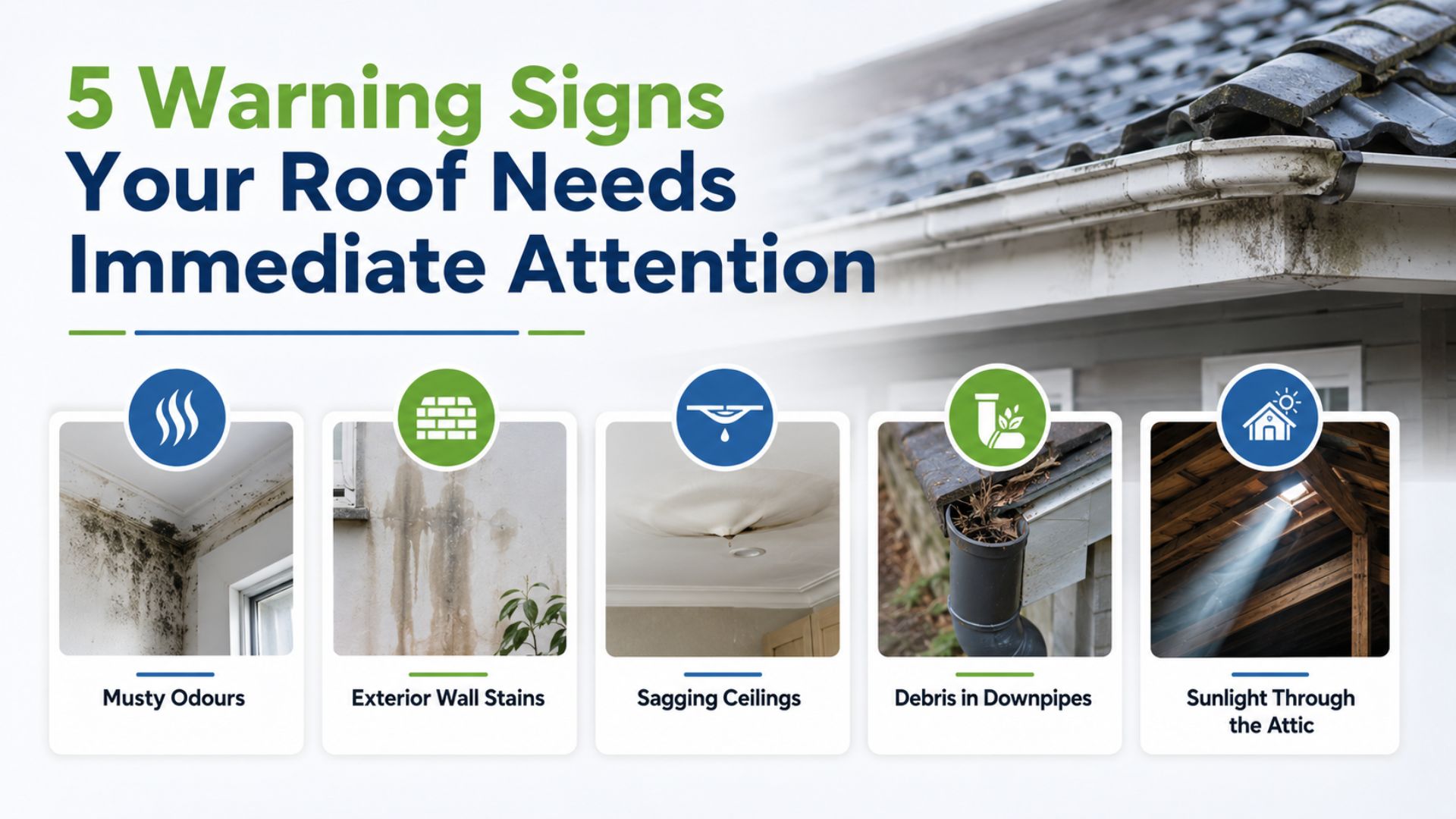
5 Warning Signs Your Roof Needs Immediate Attention
You don’t need to climb on your roof to spot the red flags. If you notice any of the following, it’s time to call a professional for Roof Leak Repairs Near You:
- Musty Odours: A faint, damp smell in your attic or upper rooms is often the first sign of trapped moisture and emerging mold.
- Exterior Wall Stains: Water tracking down the inside of your brickwork often indicates a failed flashing or valley.
- Sagging Ceilings: This is a late-stage warning of severe water saturation in the plasterboard.
- Debris in Downpipes: Finding silt or granules from roof tiles at the bottom of your downpipes indicates that your roof surface is actively degrading.
- Sunlight Through the Attic: If you can see daylight through your roof boards, water can easily enter during the next storm.
For a deeper dive into these symptoms, check our Top 7 Common Causes of Roof Leaks in Sydney Homes.
Step-by-Step: What to Do When You Find a Leak
If you have an active Leaking Roof, take these steps immediately to protect your home:
- Clear the Area: Move furniture and electronics away from the drip.
- Relieve the Pressure: If the ceiling is bulging, carefully poke a small hole in the centre of the bulge with a screwdriver to let the water drain into a bucket. This prevents the ceiling from collapsing under the weight.
- Document Everything: Take photos of the leak and the external roof area. If you need to file an insurance claim, these timestamps are vital.
- Contact a Professional: Do not attempt to climb a ladder during or immediately after a storm. You risk injury, and improper foot traffic can cause further damage to damp tiles.
For emergency guidance, review our Emergency Roof Leak Repairs: What Sydney Homeowners Need to Know.
Repair vs. Replacement: The Decision Guide
Many homeowners fear that a leak automatically means a full roof replacement. In reality, most Roof Repair tasks are localized.
- Repair is sufficient if: The leak is caused by a slipped tile, a rusted valley, or failed flashing, and the rest of the roof structure is sound.
- Replacement is recommended if: The roof has passed its 20–25 year lifespan, has widespread tile degradation, or has significant structural rot caused by years of undetected leaks.
To understand your specific needs, it’s best to have an expert perform a Roof Leak Repair Checklist for Sydney Suburbs.
Common Mistakes to Avoid
- The “Silicone Trap”: Applying hardware store silicone over a crack is a temporary band-aid, not a fix. It often traps water, accelerating rust or rot.
- Ignoring Gutter Health: You cannot have a waterproof roof if your gutters are overflowing. Regular Professional Gutter Cleaning in Sydney is your first line of defense.
- DIY Climbing: Sydney roofs are often steep and slick. The risk of a fall far outweighs the cost of a professional inspection.
Why Professional Intervention Matters
While a patch might seem easy, professional roof leak repair Sydney involves more than just sealing a hole. We look for the source, not just the symptom. Often, a leak appears in the bedroom, but the water entered the roof space ten metres away, traveling along a rafter.
If your leak is related to specific components, we recommend reading:
Secure Your Home Today
Don’t wait for the next heavy rain to discover how vulnerable your roof really is. At The Sydney Roof Doctor, we specialize in identifying and fixing leaks before they cause permanent damage.
Contact us today for a professional roof assessment and take the first step toward a leak-free home.