
Noticed a suspicious damp patch on your ceiling after a heavy Sydney downpour? Or perhaps you’ve spotted a trail of rust bleeding down your roof tiles?
If you’re like most Sydney homeowners, you probably don’t spend much time thinking about your roof valleys, until they fail. These “V-shaped” metal channels are the heavy lifters of your drainage system, directing thousands of liters of water off your roof. When they rust through or become blocked, your home’s structural integrity is officially on the clock.
At The Sydney Roof Doctor, we’ve seen how a minor $500 maintenance issue can spiral into a $15,000 structural nightmare simply because a valley replacement was delayed.
In this guide, we’ll break down everything you need to know about roof valley replacement, the best time of year to get it done in Sydney, and how to spot the warning signs before the next storm hits.

What is a Roof Valley (And Why Does It Fail?)
Think of your roof valleys as the “main highways” for rainwater. They are the internal angles formed where two roof slopes meet. Because they handle the highest volume of water, they are also the first place where problems start.
In Sydney, most valleys are constructed from Galvanised steel or Colorbond. Over time, several factors lead to their demise:
- Debris Accumulation: Leaves from overhanging gum trees trap moisture against the metal, leading to accelerated corrosion.
- Sacrificial Rust: If you have an older home, the zinc coating eventually wears off, leaving the raw steel exposed to Sydney’s salty coastal air.
- Poor Installation: If the valleys weren’t “ribbed” or “turned up” at the edges correctly during the initial build, water can easily overtop the valley and enter your roof cavity.
5 Signs You Need a Roof Valley Replacement (Don’t Ignore These!)
Many homeowners mistake valley issues for simple “cracked tiles.” However, if you notice these four red flags, the problem is likely deeper:
- Visible Rust Holes: If you can see “pinholes” or flaky orange patches in the valley metal, the barrier is gone. Water is already seeping through.
- Silt and Mud Buildup: If the “valley guts” are filled with dirt, water cannot flow freely. This causes “damming,” where water backs up under your tiles.
- Ceiling Stains at Internal Corners: If you see brown rings on your ceiling specifically where two roof lines meet, your valley is leaking.
- Worn Mortar (Bedding & Pointing): The “cut tiles” that sit along the valley are held in place by mortar. If this is crumbling, the tiles can slip, blocking the water’s path.
- Dry Rot in the Batten: During a roof repair, we often find that the timber battens supporting the valley have rotted away due to slow, undetected leaks.
Timing Your Repair: When is the Best Season for Roof Valley Replacement in Sydney?
Timing is everything when it comes to Roof Repairs in Sydney. Our local climate presents unique challenges that can affect the quality and cost of your replacement.
Summer: The Season of Urgency
Sydney summers are notorious for sudden, violent afternoon thunderstorms. While it’s a popular time for repairs, it’s also high-risk. A roof opened up during a “Southerly Buster” is a recipe for disaster.
- Pros: Dry spells allow for quick paint curing if you are doing a full restoration.
- Cons: High heat can make the metal too hot to handle; storm risks are constant.
Autumn: The “Sweet Spot”
Many experts agree that March to May is the prime window. The weather is stable, the humidity drops, and you can clear out summer debris before the winter rains arrive.
Winter: The Testing Ground
Winter in Sydney is often our “driest” season in terms of humidity, but persistent drizzling rain can delay projects. However, replacing valleys in winter ensures your home is watertight before the heavy spring rains.
Roof Valley Repair vs. Replacement: Which One Do You Need?
We often get asked: “Can’t you just patch the hole with some silicone or bitumen tape?”
As a professional Roof Repair specialist, my answer is almost always no. Here’s why:
| Feature | Patch Repair (DIY/Handyman) | Professional Valley Replacement |
| Durability | Temporary (6–12 months) | Permanent (20–30 years) |
| Material | Silicone or Tape | New Colorbond or Lead |
| Cost | Low upfront | Moderate |
| Risk | Masks the problem; rot continues | Solves the root cause |
| Warranty | None | 10-year workmanship guarantee |
The Verdict: If the metal is rusted, “patching” is like putting a band-aid on a shark bite. The rust will continue to spread under the patch. A full replacement involves removing the tiles, swapping the old metal for new, and re-bedding the tiles. It is the only way to guarantee a leak-free home.
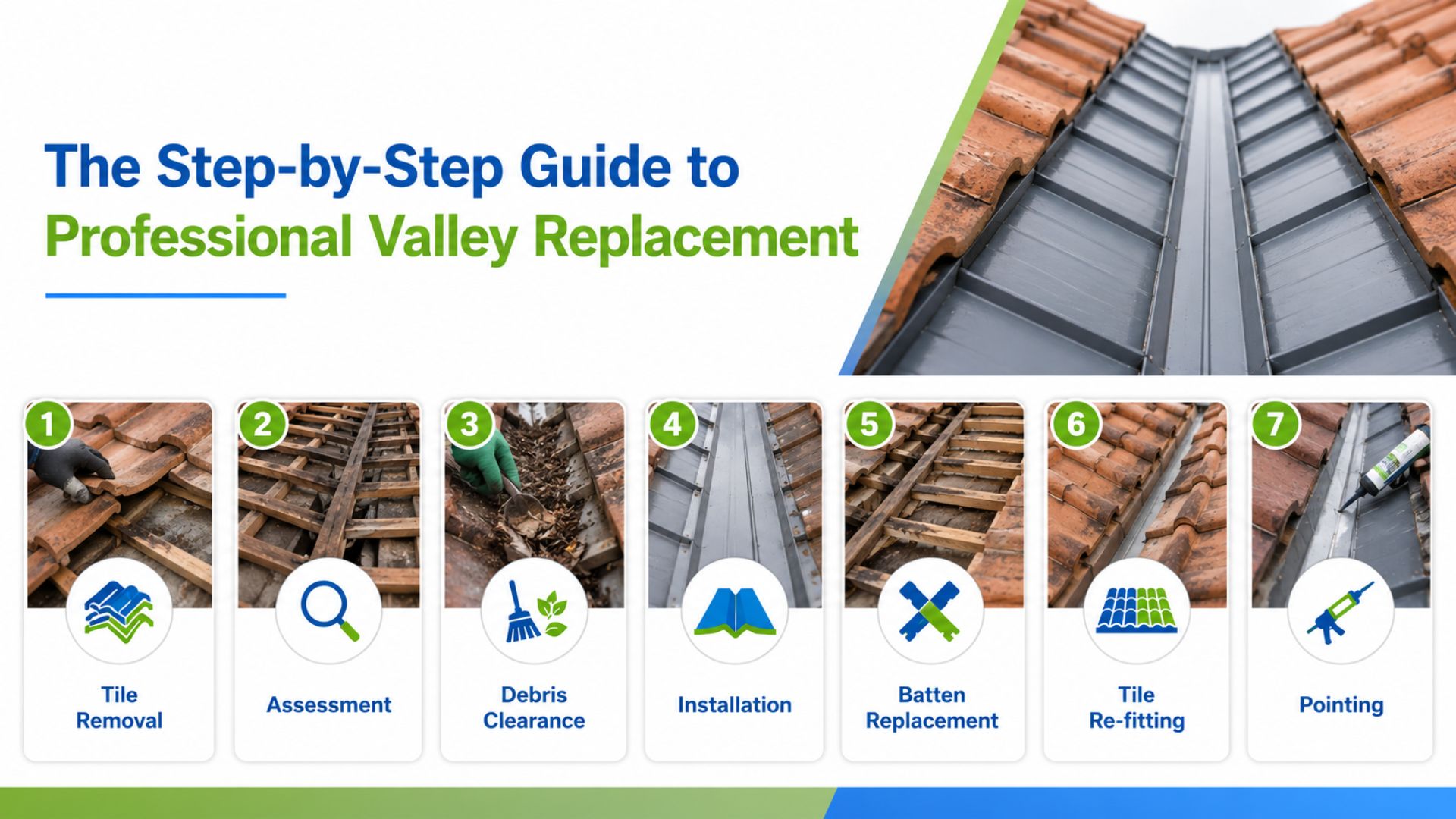
The Step-by-Step Guide to Professional Valley Replacement
What actually happens when The Sydney Roof Doctor arrives at your home? Here is our refined process:
- Tile Removal: We carefully remove two rows of tiles on either side of the valley.
- Assessment: We inspect the underlying timber rafters for rot or termite damage.
- Debris Clearance: We clear years of built-up leaf litter and “muck” that has accumulated under the tiles.
- Installation: We install a new, high-grade Colorbond or Aluminium valley with “V-ribs” to prevent water overflow.
- Batten Replacement: If the timber is soft, we replace it to ensure a solid foundation.
- Tile Re-fitting: The tiles are cut to fit perfectly and secured.
- Pointing: We apply a flexible pointing compound to seal the edges and prevent birds or vermin from entering.
What Determines the Cost of Roof Valley Replacement?
While every roof is different, most Roof Valley Replacements in Sydney fall within a predictable price range based on these factors:
- Length of the Valley: Most valleys are 2.4m to 3.0m sections. The more sections, the higher the cost.
- Roof Pitch: Steep roofs require harness equipment and more time, which increases labor costs.
- Access: Is it a single-story cottage or a three-story narrow terrace in Paddington? Height affects safety requirements.
- Material Choice: Colorbond is the standard, but heritage homes may require Lead or Copper, which carries a premium price.
Common Mistakes Homeowners Make
- Waiting for a Visible Leak: By the time you see water on your ceiling, it has already traveled through your insulation and soaked your timber framing.
- Hiring a “General” Handyman: Roofing is a licensed trade for a reason. Incorrect flashing or valley installation can actually cause more leaks than you started with.
- Ignoring the Gutters: A new valley is useless if the gutters it feeds into are blocked. Always look at the system as a whole.
Why Timely Repairs Matter for Your Sydney Property
Beyond just staying dry, maintaining your roof valleys protects your biggest investment.
- Property Value: A well-maintained roof is a major selling point.
- Health: Undetected leaks lead to black mold in the ceiling, which can cause respiratory issues for your family.
- Insurance: Most insurance companies will deny a claim for water damage if they find the cause was “gradual rust and lack of maintenance.”
If you’re looking for more information on keeping your Sydney home in top shape, check out our other guides:
- [Leaking Roof? Don’t Wait: 5 Red Flags You Can’t Ignore]
- [The Ultimate Guide to Professional Gutter Cleaning in Sydney]
- [Leaking Skylight Repairs Sydney: The Complete Homeowner’s Guide]
FAQs: Your Questions Answered
Q. How long does it take to replace a roof valley?
For a standard Sydney home, replacing a single valley usually takes 3 to 5 hours. If there are multiple valleys or significant timber rot, it may take a full day.
Q. Can I replace a roof valley myself?
Unless you are comfortable working at heights and have experience with tile cutting and metal flashing, we don’t recommend it. One incorrectly placed nail can create a new leak.
Q. Does a rusted valley mean I need a whole new roof?
Not at all! Many roofs are structurally sound but have “localized” failures. Replacing the valleys can extend the life of your entire roof by another 10–15 years.
Q. How much do roof repairs cost for a leaking valley?
Prices vary, but a professional replacement of a single valley typically starts around $450 to $850, depending on the complexity and materials used.
Q. Why is my new valley overflowing?
This usually happens if the valley is “closed” (tiles too close together) or if the valley doesn’t have a center rib to break the flow of water coming from one side.
Conclusion: Don’t Wait for the Next Big Wet
Your roof is the only thing standing between your family and the unpredictable Sydney weather. A rusted or blocked valley is a ticking time bomb.
If you haven’t had your roof inspected in the last 2 years, or if you’ve spotted any of the warning signs mentioned above, now is the time to act. Addressing a Roof Valley Replacement today is significantly cheaper and less stressful than dealing with an emergency ceiling collapse in the middle of a storm.
Ready to secure your home? Contact The Sydney Roof Doctor today for an honest, expert assessment of your roof’s health. We’ll help you decide if a simple repair or a full replacement is the right move for your property.