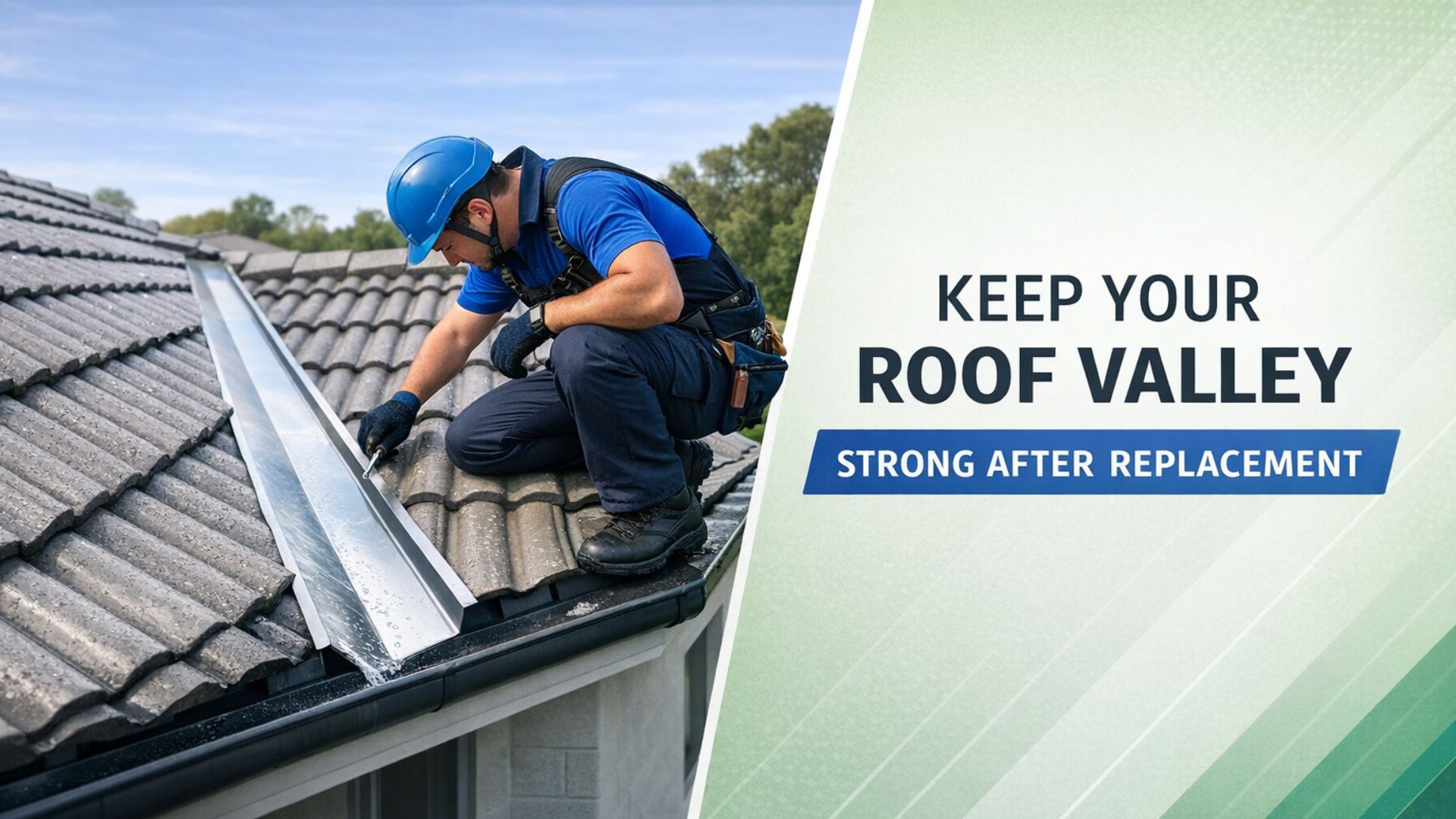
The Ultimate Guide to Roof Valley Replacement: Why They Fail and How to Fix Them for Good

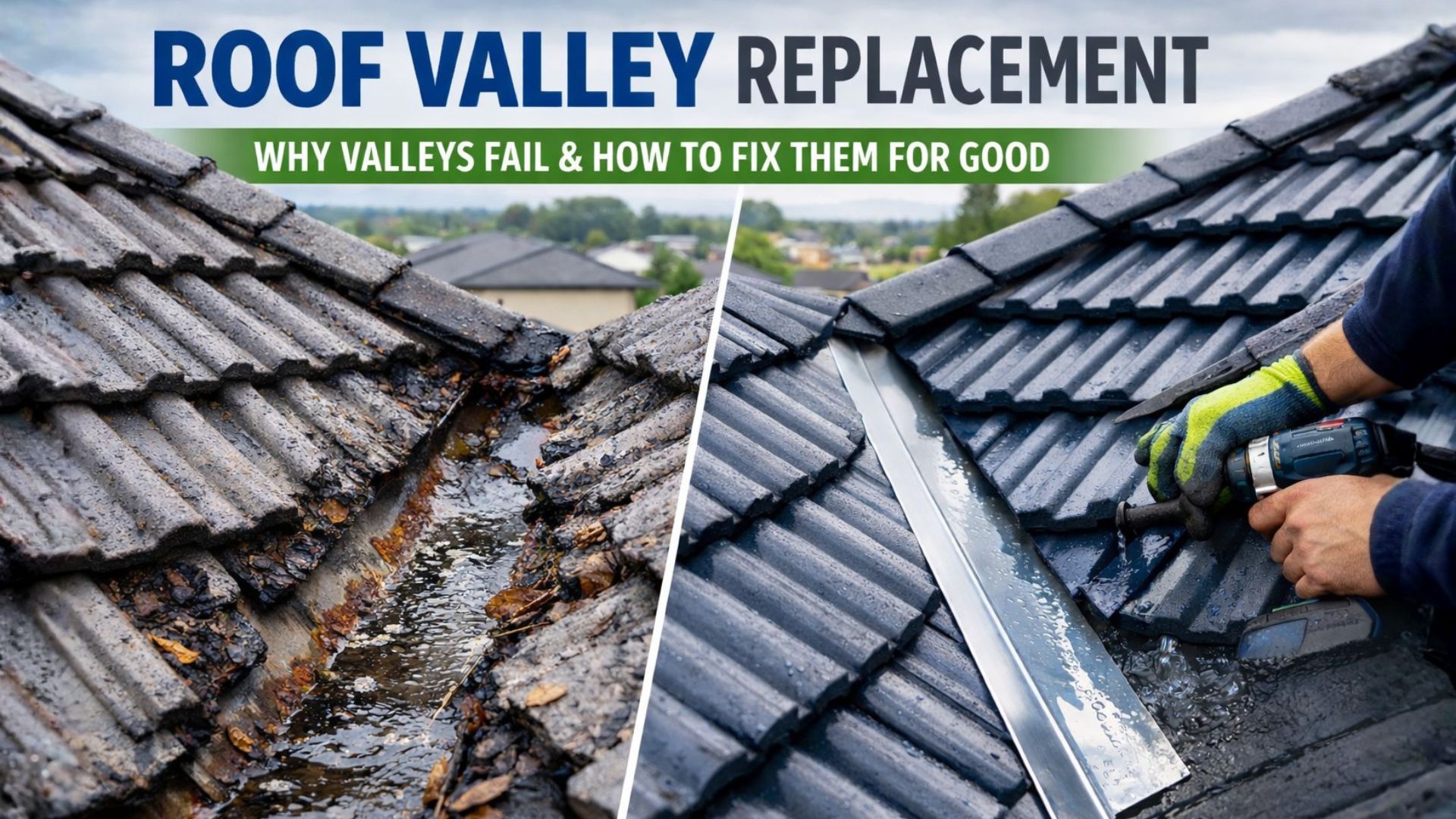
Noticed a mysterious damp patch on your ceiling after a classic Sydney downpour? Or perhaps you’ve spotted rusted metal peeking through the “V” where your roof planes meet?

If you’re nodding your head, you’re likely dealing with a roof valley issue. In the world of roofing, the valley is the “highway” for rainwater. When it works, you don’t notice it. When it fails, it doesn’t just leak, it pours directly into the structural bones of your home.

At The Sydney Roof Doctor, we’ve seen thousands of valleys across Greater Sydney. We know that a Roof Valley Replacement is one of the most critical Roofing Repairs Sydney homeowners will face.

In this guide, we’ll break down why these valleys fail, how to spot the damage before your ceiling collapses, and why the “cheap fix” almost always costs more in the long run.

Roof Valley Replacement (1)

What is a Roof Valley (and Why is it So Vulnerable)?

Think of your roof as a series of watersheds. A roof valley is the internal angle formed where two roof slopes meet. Because of gravity, all the water hitting those two slopes funnels into this single channel.

During a heavy Sydney storm, a roof valley carries more water than any other part of your roof. Because it handles the highest volume of runoff, it is the first place to leak if the installation isn’t perfect.

The Anatomy of a Valley

Whether you have a terracotta tile roof or a modern Colorbond finish, the valley usually consists of:

  • The Valley Iron (or Flashing): The metal “V” channel that sits underneath the roofing material.
  • Bedding and Pointing: The mortar that seals the tiles against the valley (in tile roofs).
  • Overhang: How far the tiles or metal sheets extend over the valley.

4 Common Reasons Why Roof Valleys Fail

Many homeowners assume a Leaking Roof is just a sign of an “old house.” While age is a factor, most valley failures in Sydney stem from four specific culprits.

1. The “Leaf Trap” (Debris Buildup)

Sydney’s leafy suburbs are beautiful, but they are a roof valley’s worst enemy. Leaves, twigs, and bird droppings collect in the valley. This debris acts like a dam. Instead of water flowing into the gutters, it pools, backs up under your tiles, and rots your timber batten.

2. Rust and Corrosion

Most older Sydney homes use galvanized steel valley irons. Over 15–20 years, the protective coating wears off. Once rust sets in, it creates pinholes. You might not see a gushing leak, but a constant “weep” will slowly rot your ceiling joists.

3. Poor Original Installation

We often see valleys where the metal was cut too short or the “return” (the lip at the edge of the metal) wasn’t high enough. If the valley isn’t wide enough to handle high-volume water, it overflows into the roof cavity during a heavy storm.

4. Cracked Bedding and Pointing

On tile roofs, the mortar holding the tiles along the valley edge can crack due to the natural expansion and contraction of the house. Once that seal is broken, water finds a path inside.

Signs Your Roof Valley Needs Urgent Attention

You don’t need to climb a ladder to know you have a problem. Keep an eye out for these “red flags”:

  • Water Stains in Corners: Look at the ceilings directly below where two roof planes meet. Brown “coffee” stains are a dead giveaway.
  • Visible Rust: If you can see orange or brown streaks in your roof valleys from the ground, the metal is compromised.
  • Loose Mortar in Gutters: Finding chunks of cement in your gutters? That’s likely the bedding from your valleys washing away.
  • Damp Smells: A musty odor in the attic or upper floor often points to a slow, chronic valley leak that hasn’t quite breached the plasterboard yet.

Roof Valley

Roof Valley Repair vs. Full Replacement: Which Do You Need?

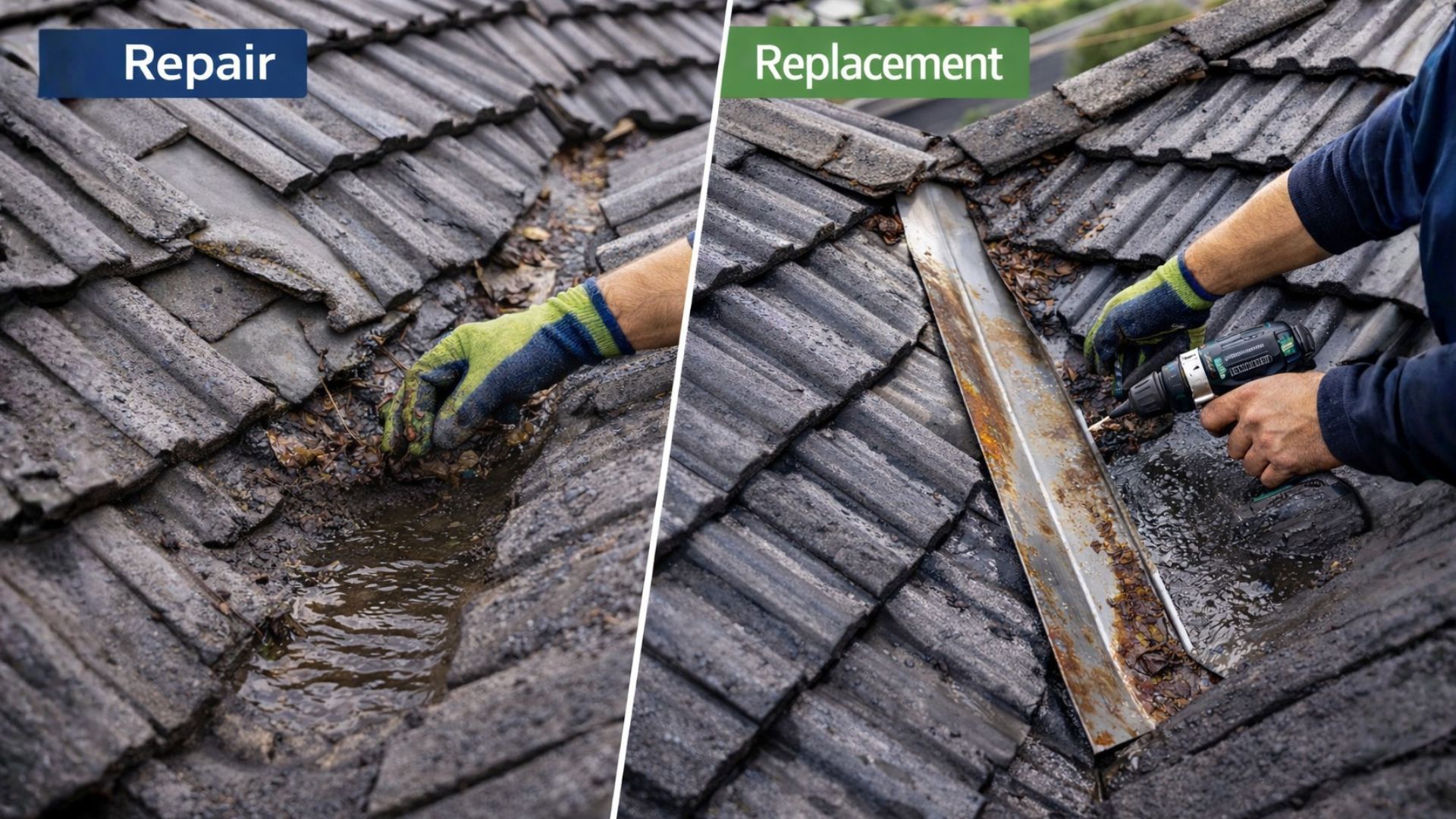
Many homeowners ask, “Can’t you just patch it?” As experts in Roof Repairs Sydney, we always prioritize the most cost-effective long-term solution. Here is how we help you decide:

When to Roof Valley Repair:

  • The leak is caused purely by a debris blockage.
  • The valley iron is in perfect condition, but the mortar (pointing) has cracked.
  • The issue is a single broken tile overlapping the valley.

When to for Roof Valley Replacement:

  • The Metal is Rusted: You cannot “patch” rust. If there are holes, the entire length must be replaced.
  • Incorrect Pitch: If the original valley was installed with the wrong fall, it will always leak. Replacement is the only fix.
  • The Roof is Over 20 Years Old: If you are already doing significant Roof Repair, replacing the valleys is a smart “insurance policy” to prevent future leaks.

What Does a Professional Roof Valley Replacement Look Like?

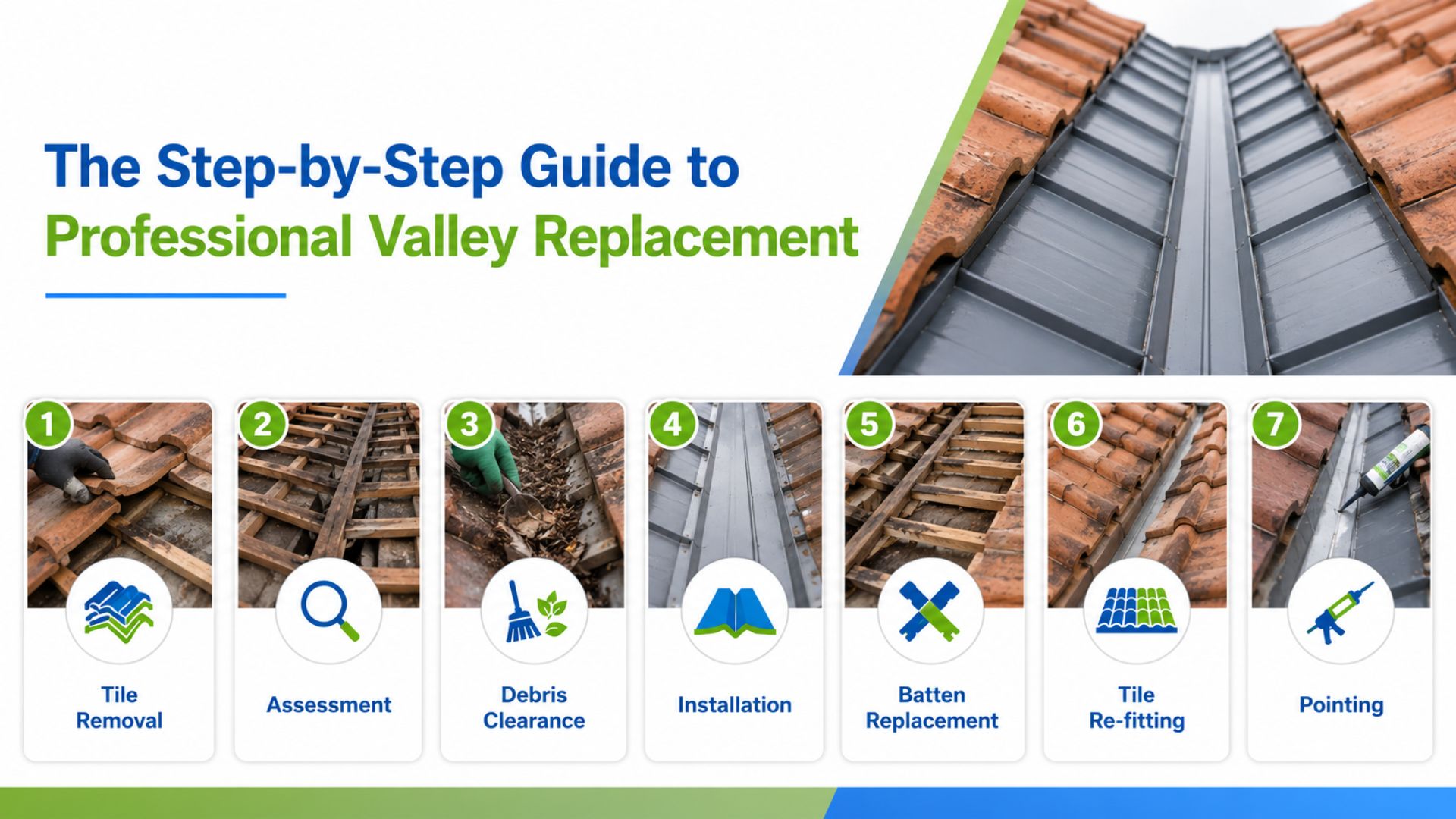
If you hire a “handyman,” they might just slap some silicone over the leak. If you hire The Sydney Roof Doctor, we follow a rigorous process to ensure the leak never returns:

  1. Tile/Sheet Removal: We carefully remove the roofing material around the valley.
  2. Inspection of Sub-structure: We check the timber battens and sarking (insulation) for rot. If the wood is soft, we replace it.
  3. Custom Flashing Installation: We install high-quality, Australian-standard Colorbond or Zincalume valley irons with a high “rib” to prevent water overflow.
  4. Batten Protection: We apply “anti-capillary” strips to ensure water can’t be sucked back under the tiles.
  5. Re-bedding and Pointing: We reset the tiles using a flexible pointing compound that moves with your house, preventing future cracks.

The True Cost of Ignoring a Valley Leak

We understand that home maintenance isn’t cheap. However, a roof valley replacement is significantly more affordable than the alternative.

FactorRepairReplacement
CostLower upfrontHigher upfront
LongevityShort to mediumLong-term solution
EffectivenessTemporary in some casesPermanent fix
Best ForMinor issuesMajor or recurring problems

Expert Insight: A small leak in the valley doesn’t just damage the ceiling; it can short-circuit your electrical wiring and encourage black mold growth, a serious health risk for families.

Roof Valley Replacement Sydney

Common Mistakes to Avoid (The “Cheap” Trap)

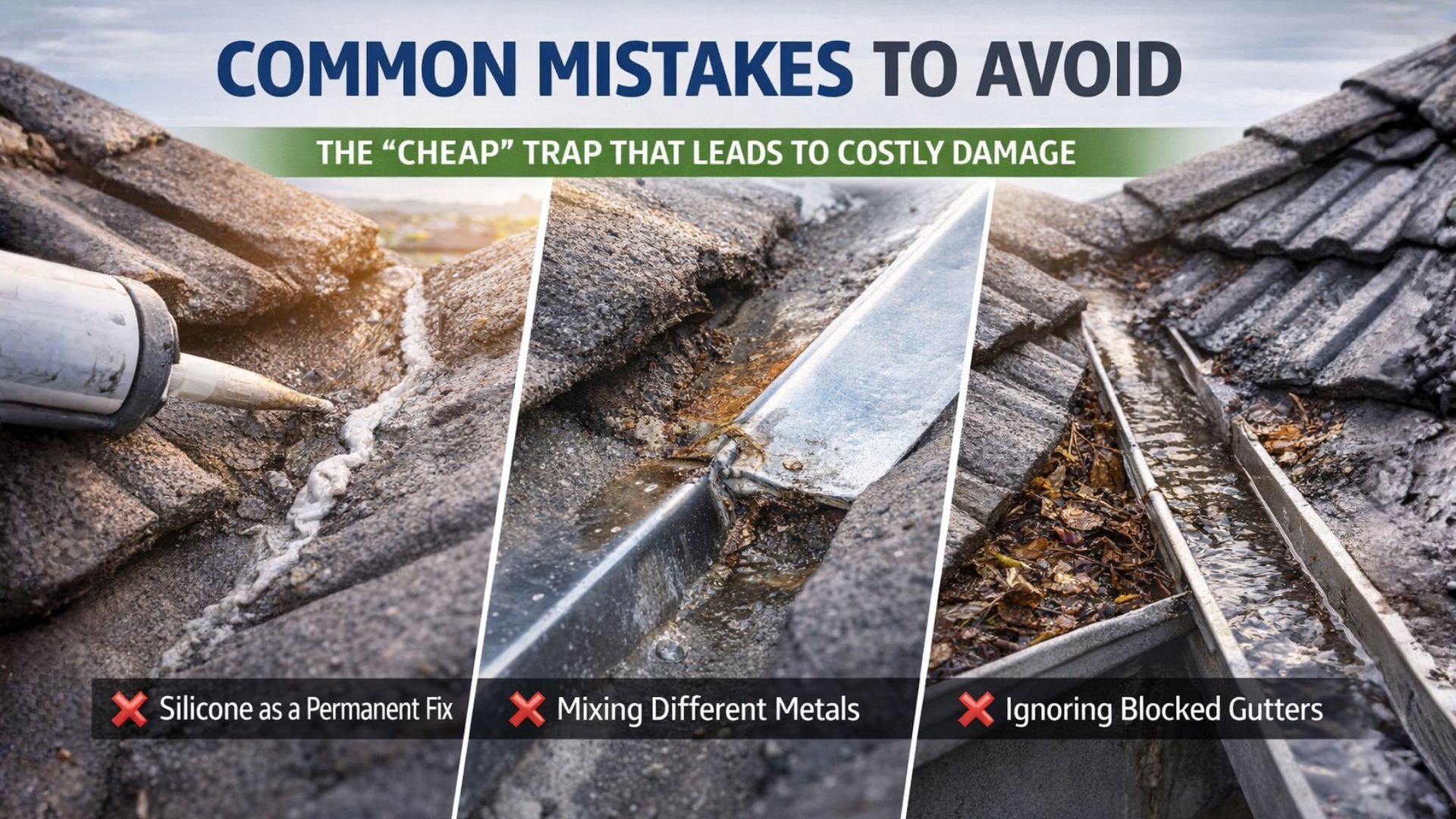
In our 20+ years of experience, we’ve fixed many “repairs” done by others. Avoid these common pitfalls:

  • Using Silicone as a Permanent Fix: Silicone is a temporary sealant. It shrinks in the Sydney sun and will fail within months.
  • Mixing Metals: Never put a new aluminum valley against old galvanized parts; “galvanic corrosion” will eat through the metal faster than you can imagine.
  • Ignoring the Gutters: A valley replacement is useless if your gutters are blocked and water backs up into the new valley.

Professional vs. DIY: Can You Do It Yourself?

We’re all for a bit of DIY, but roof valleys are the “advanced level” of home maintenance.

  • The Safety Risk: Valleys are often the steepest part of the roof and require specialist harness equipment.
  • Technical Precision: Getting the “lead-out” and “overhang” measurements wrong by even 10mm can cause a catastrophic leak.
  • Warranty: A professional installation comes with a workmanship guarantee. A DIY job comes with a “cross your fingers” policy.

Why Timely Repairs Matter for Sydney Homeowners

Sydney’s climate is unique. We deal with intense UV rays that bake your roof, followed by sudden, high-volume “East Coast Low” storms. This cycle of extreme heat and flash flooding is brutal on roof valleys.

By addressing a [Roof Valley Replacement] early, you protect your home’s resale value and ensure your family stays dry during the next “Big Wet.”

Frequently Asked Questions

Q. How urgent is a roof valley leak?

It is a Priority 1 repair. Because valleys carry the most water, a leak here can cause significant internal damage in a single storm.

Q. How much does a roof valley replacement cost in Sydney?

Costs vary based on the length of the valley and the roofing material (tile vs. metal). Generally, a single valley replacement can range from $800 to $2,500. We provide detailed, transparent quotes after an on-site inspection.

Q. How long does the repair take?

Most replacements are completed within one day, depending on the weather and the size of the roof.

Q. Does my home insurance cover roof valley replacement?

Usually, insurance covers the resulting damage (like your ruined ceiling), but not the maintenance (the rusted valley itself). However, fixing the valley is required to prevent insurance from denying future claims.

Q. Can you replace a valley in the rain?

For safety and quality reasons, we cannot replace the metal during active rain. However, we do offer emergency tarping services to keep you dry until the weather clears.

Ready to Secure Your Roof?

Don’t wait for the next storm to turn a small drip into a major disaster. At The Sydney Roof Doctor, we specialize in identifying and fixing the most stubborn roof leaks.

Get a Free, No-Obligation Roof Inspection Today

Protect your home. Protect your family. Let the experts handle the heavy lifting.

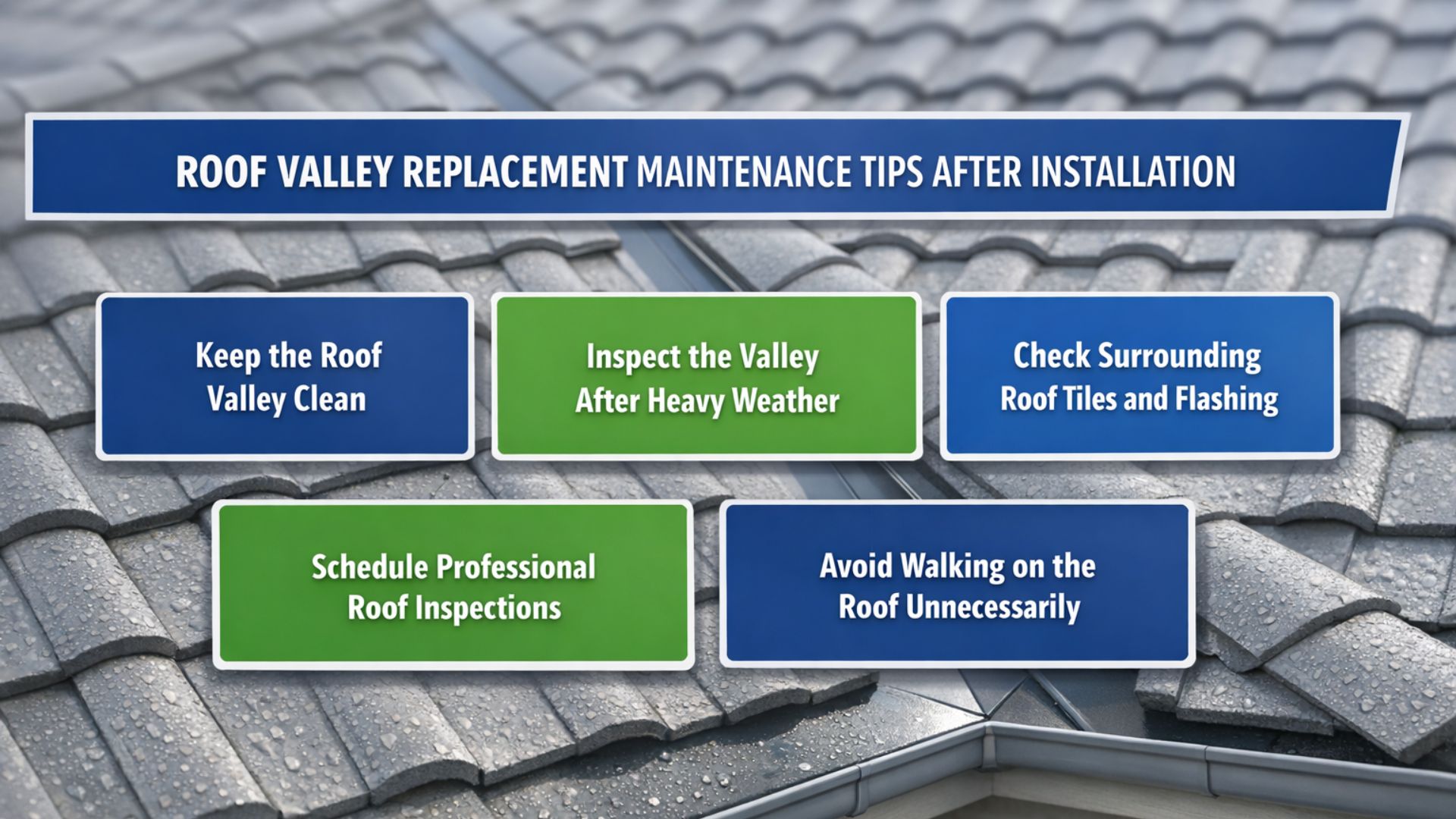
Roof Valley Replacement Maintenance Tips After Installation

A roof valley is one of the most important yet often overlooked parts of a roofing system. It is responsible for directing rainwater safely from the roof down to the gutters. Because this area handles a large amount of water flow during heavy rain, it must stay in excellent condition to prevent leaks and structural damage. After a professional installation, homeowners should follow proper maintenance practices to extend the life of their roof. Regular care after roof valley replacement ensures your roof continues protecting your home for many years.

Roof Valley Replacement

Why Roof Valley Maintenance Matters

Roof valleys naturally collect rainwater, debris, and sometimes dirt from surrounding roof sections. Because of this constant exposure, they tend to wear out faster than other parts of the roof. If debris builds up or minor damage goes unnoticed, water may start pooling or leaking into the roof structure. Over time, this can lead to expensive structural problems or the need for major Roof Repair work.

Proper maintenance after installation keeps the valley functioning as intended and helps avoid unnecessary Roof Repairs in the future.

1. Keep the Roof Valley Clean

One of the simplest yet most effective maintenance steps is regular cleaning. Leaves, twigs, and dirt can accumulate in the valley and block water flow. When water cannot drain properly, it may seep under the tiles or roofing materials.

Cleaning the valley periodically ensures that rainwater flows freely into the gutter system. It also prevents rust or moisture buildup that could lead to future Roof Repair issues.

Homeowners should check the valley, especially after storms or during autumn, when debris tends to collect quickly.

2. Inspect the Valley After Heavy Weather

Strong winds, storms, and heavy rainfall can affect roofing materials over time. Even after a professional installation, it is wise to visually inspect the roof valley after extreme weather events.

Look for signs such as:

  • Loose roof tiles
  • Rust forming on metal flashing
  • Water stains on ceilings or walls

These signs may indicate early damage that requires immediate attention. Addressing such issues early can prevent larger and more costly Roof Repairs later.

3. Check Surrounding Roof Tiles and Flashing

A roof valley works together with nearby roof tiles and flashing. If surrounding tiles shift or break, they can expose the valley to water damage.

Regularly checking the tiles around the valley helps ensure everything stays aligned and secure. If you notice cracked tiles or gaps, scheduling a quick Roof Repair can prevent water from reaching the underlayment or roof structure.

Roof Valley Replacement service

4. Schedule Professional Roof Inspections

While basic checks can be done by homeowners, professional inspections provide a more detailed assessment. Roofing specialists can identify early signs of wear that might not be visible from the ground.

Including your valley in routine inspections is especially important because valleys handle concentrated rainwater flow. Professionals can also check sealing, flashing, and tile placement to ensure everything is functioning properly.

For homeowners in Sydney, The Sydney Roof Doctor provides thorough inspections and expert solutions to keep roofs performing at their best.

5. Avoid Walking on the Roof Unnecessarily

Walking on the roof without proper knowledge can damage tiles or disturb the valley installation. Heavy pressure may crack tiles or loosen materials around the valley area.

If maintenance work is needed, it is always safer to hire experienced professionals rather than attempting DIY fixes that could lead to additional roof repairs.

Trusted Roofing Support from The Sydney Roof Doctor

When it comes to maintaining your roof, professional expertise makes all the difference. The Sydney Roof Doctor specialises in roof inspections, valley replacements, and reliable roofing solutions designed for Sydney’s climate.

Their experienced team uses high-quality materials and proven techniques to ensure every installation lasts for years. Whether you need maintenance, inspections, or expert roof repair, their specialists provide dependable service and practical advice for homeowners.

Final Thoughts: A well-installed roof valley protects your home by directing rainwater safely away from your roof structure. However, installation is only the first step. Regular cleaning, inspections, and timely repairs are essential to keep the system working efficiently.

By following these simple maintenance tips and working with trusted professionals like The Sydney Roof Doctor, homeowners can extend the lifespan of their roofing system and avoid costly damage. Consistent care after roof valley replacement ensures your roof stays strong, secure, and ready to handle every season.

How Roof Valley Replacement Prevents Roof Leaks & Structural Damage

A Sydney Homeowner’s Practical Guide

After a heavy Sydney downpour, many homeowners notice it for the first time – a brown stain forming near the corner of the ceiling.

It’s not directly under a broken tile. It’s not near a skylight. It’s often along an internal wall.

In many cases, the cause isn’t the tile itself.

It’s the roof valley.

If you’ve been dealing with recurring leaks or searching for Roof Valley Replacement, this guide explains:

  • What a roof valley actually does
  • Why valleys fail in Sydney conditions
  • How failure leads to serious structural damage
  • When replacement is necessary (not just patching)
  • How professional repair prevents long-term issues

This isn’t a sales pitch. It’s practical guidance from experience working across Sydney’s Eastern Suburbs, North Shore, Inner West and Hills District.

What Is a Roof Valley – And Why Is It So Important?

A roof valley is the internal channel where two roof slopes meet.

It carries a large volume of rainwater from both sides of the roof down into the gutter system.

In simple terms:

  • Tiles shed water toward the valley
  • The valley directs water downward
  • Gutters carry it away from the home

Because valleys collect concentrated water flow, they’re one of the most vulnerable parts of the entire roof system.

When they fail, leaks are rarely minor.

Roof Valley Replacement

Why Roof Valleys Fail in Sydney Homes

Many Sydney homeowners don’t realise that valleys take more punishment than any other roof component.

1. Leaf Build-Up in Tree-Heavy Suburbs

In areas like Wahroonga, Lane Cove and Baulkham Hills:

  • Gum leaves accumulate quickly
  • Debris traps moisture
  • Water pools instead of draining

Over time, this accelerates rust.

Blocked valleys are one of the leading causes of Roof Leak Repair Sydney callouts.

2. Coastal Corrosion

In Sydney’s Eastern Suburbs and coastal areas:

  • Salt air speeds up metal deterioration
  • Valley flashing corrodes faster
  • Protective coatings break down sooner

Metal valleys exposed to salt air often have a shorter lifespan.

3. Incorrect Installation

Common mistakes include:

  • Nails driven too low in the valley
  • Incorrect overlaps
  • Poor sealing at the top join
  • Inadequate sarking (underlay) protection

When nails are placed in the water channel, rust develops around them. Eventually, water enters directly through the fastener point.

4. Thermal Expansion & Contraction

Sydney’s hot summers and cool nights cause:

  • Metal expansion
  • Movement at joins
  • Sealant separation

Over time, small gaps form. During heavy rain, those gaps become leak points.

What Happens If a Roof Valley Fails?

This is where many articles stop at “you’ll get a leak.”

In reality, the damage escalates quickly.

Stage 1: Water Entry

Water enters beneath tiles and into the sarking layer.

Stage 2: Insulation Saturation

Insulation absorbs water like a sponge.

This reduces thermal efficiency and encourages mould.

Stage 3: Timber Rot

Battens and rafters begin to soften.

Rot weakens structural integrity.

Stage 4: Internal Damage

  • Ceiling plaster stains
  • Paint peels
  • Cornices crack
  • Electrical risk increases

Left untreated, a failed valley can cause thousands in internal repair costs.

Roof Leak Repair Sydney

Can You Patch a Roof Valley – Or Does It Need Replacement?

This is one of the most common questions we hear.

Minor Issues May Allow Repair

If the valley has:

  • Small isolated rust spots
  • Debris blockage
  • Localised flashing separation

Then cleaning and resealing may be possible.

Replacement Is Required When:

  • Rust has penetrated through metal
  • Multiple holes are visible
  • Water is entering repeatedly
  • Nails are rusting out
  • The valley is over 20 years old

Temporary patching over advanced rust is rarely a long-term solution.

Professional Roof Valley Replacement ensures the entire water channel is secure – not just sealed superficially.

How Roof Valley Replacement Works

At The Sydney Roof Doctor (TSRD), valley replacement follows a structured process.

Step 1: Tile Removal Around the Valley

Tiles are carefully lifted without causing additional cracking.

Step 2: Old Valley Removal

The rusted or damaged valley flashing is removed entirely.

Step 3: Inspection of Sarking & Battens

We check:

  • Timber condition
  • Moisture damage
  • Underlay integrity

If the sarking is compromised, it must be addressed before installing the new valley.

Step 4: New Valley Installation

We install high-quality Colorbond or appropriate metal valleys designed for Sydney conditions.

Proper overlaps and water flow alignment are critical.

Step 5: Tile Reinstallation & Final Inspection

Tiles are repositioned correctly, ensuring water flows cleanly into the new valley channel.

Why Proper Valley Replacement Prevents Future Roof Leaks

A professionally installed valley:

✔ Handles heavy Sydney downpours
✔ Prevents water backflow under tiles
✔ Eliminates rust-related entry points
✔ Reduces strain on gutters
✔ Protects structural timbers

When combined with gutter maintenance, valley replacement significantly reduces the need for emergency Leaking Roof Repairs Sydney.

Leaking Roof Repairs Sydney

The Hidden Role of Gutters in Valley Failure

Why do gutters overflow during Sydney storms?

Because valleys channel massive water volume into them.

If gutters are blocked:

  • Water backs up
  • It pushes up the valley channel
  • It spills under tiles

Valley replacement without addressing gutter maintenance only solves half the problem.

Regular gutter cleaning is essential.

Roof Valley Lifespan in Sydney

Typical valley lifespan:

  • 15–25 years (depending on material & environment)

Factors affecting lifespan:

  • Coastal exposure
  • Tree debris
  • Maintenance frequency
  • Installation quality

If your home is over 20 years old and hasn’t had valley work done, inspection is strongly recommended.

Signs Your Roof Valley May Need Replacement

Look for:

  • Rust visible in the valley channel
  • Debris build-up that doesn’t drain
  • Ceiling stains near internal walls
  • Persistent leaks despite tile repairs
  • Water marks along fascia

If these signs are present, patch repairs may not be enough.

Roof Valley Replacement vs Full Roof Replacement

Many homeowners worry valley issues mean a full roof replacement.

In most cases, that’s not true.

If tiles are structurally sound and only the valley has failed, targeted valley replacement is cost-effective and practical.

Full roof replacement is only necessary when:

  • Widespread tile deterioration exists
  • Structural timber damage is extensive
  • Multiple roof systems are failing simultaneously

An experienced roofer will explain the difference clearly.

Cost Considerations for Sydney Homes

Roof Valley Replacement costs vary based on:

  • Roof height
  • Accessibility
  • Valley length
  • Extent of surrounding damage
  • Tile condition

Straightforward valley replacement is significantly less expensive than repairing internal structural damage caused by prolonged leaks.

Early intervention always saves money.

Insurance & Storm Damage

Is roof valley replacement covered by insurance?

Often yes – if damage is sudden and storm-related.

Insurance may not cover:

  • Gradual rust
  • Neglected maintenance

Proper inspection reports and documentation help support claims.

Roof Valley Inspection Checklist for Sydney Homeowners

Use this annually:

✔ Check for rust along valley channel
✔ Ensure water flows freely during rain
✔ Inspect for leaf accumulation
✔ Look for ceiling staining after storms
✔ Check ridge caps for displacement
✔ Confirm gutters aren’t overflowing

If you’re unsure about safe access, professional inspection is safer and more accurate.

Why Experience Matters in Valley Work

Valleys are precision components.

Incorrect installation can:

  • Direct water under tiles
  • Create pooling
  • Cause premature rust

The Sydney Roof Doctor works specifically with Sydney’s weather patterns, roof types and suburban conditions.

Understanding how valleys behave during heavy rainfall is not theoretical – it comes from on-site experience.

Strata & Commercial Considerations

For strata managers and commercial property owners:

  • Valley failure can affect multiple units
  • Water can spread across shared roof sections
  • Compliance and safety standards must be met

Regular roof maintenance plans reduce liability and emergency callouts.

Frequently Asked Questions – Sydney Roof Valleys

Q. How long does a roof valley last in Sydney?

Typically 15–25 years. Coastal homes may experience shorter lifespans due to salt exposure.

Q. Can I patch a rusted valley?

Small surface rust may be treatable. Penetrated rust requires replacement for long-term protection.

Q. Why does my leak appear far from the valley?

Water travels along rafters before dripping. Entry points are often not directly above visible stains.

Q. Does replacing the valley stop all leaks?

If the valley is the source, yes. However, flashing and gutter conditions must also be inspected.

Q. How often should valleys be inspected?

Annually and after major storms.

Q. Preventing Structural Damage Starts at the Roof

Many Sydney homeowners don’t think about their roof valleys until there’s visible damage.

By then:

  • Insulation may be wet
  • Timber may be deteriorating
  • Mould may be forming

Proactive valley inspection and replacement protect:

  • Property value
  • Internal finishes
  • Electrical safety
  • Long-term roof lifespan

When to Contact The Sydney Roof Doctor

If you’re noticing:

  • Ceiling stains
  • Recurring leaks near internal walls
  • Rust visible in valley channels
  • Overflowing gutters during rain

It’s worth arranging a professional assessment.

The Sydney Roof Doctor provides experienced Roof Valley Replacement, Roof Leak Repair Sydney, and broader roof maintenance services across:

  • Eastern Suburbs
  • North Shore
  • Inner West
  • Hills District
  • Inner City

Clear advice. Proper diagnosis. Long-term solutions.

Final Thought

A roof valley is just a strip of metal – until it fails.

Then it becomes the main pathway for water into your home.

Replacing a deteriorated valley before it causes internal damage isn’t just maintenance – it’s structural protection.

If your home is older, located in a tree-heavy suburb, or exposed to coastal conditions, a valley inspection may prevent far more expensive repairs later.

Sydney weather is unpredictable.

Your roof shouldn’t be.

From Rust to Leaks: How to Tell When Your Roof Valley Must Be Replaced

Your roof is not just about protecting your home from the sun and rain; but it does more than that. It also helps water to channel away safely. One significant part of this system is the roof valley. This V-shaped roof valley is something where two sloping roof planes meet. As you know, the roof valley is widely used as it handles the highest concentration of rainwater. Therefore, if there is any issue, replacement is needed when there is any issue.

In this guide, we’ll explore when a roof valley should be replaced instead of just a quick fix. Also, you will get to know about what causes these issues and why acting early can save you big repair bills down the road.

Roof Valley Replacement

Roof Valley: What is It? 

On a roof, a roof valley works as the channel where two slopes come together. It directs rainwater and runoff into gutters.

There are usually three types of valleys, which are: 

  • Open metal valleys 
  • Closed valleys 
  • W-valleys

Like everything, each design has advantages and disadvantages. However, all these valleys are vulnerable to a lot of different issues, such as rust, debris buildup, and improper installation.

What Are the Early Signs That Signal Your Roof Valley May Be Failing

It is not necessary to climb onto your roof to identify problems. There are many indicators that show up inside your home first:

1. Rust on Metal Flashing

When metal valley flashing is exposed to the elements, it can corrode over time. Rust not only weakens the structure but also creates holes that let water through.

2. Water Mark on Ceilings or Walls

If you notice any dull water mark on interior ceilings or walls, that means water is likely leaking from above; then it may be the right time to replace your roof valley

3. Sagging Roof Line

If a section of your roof appears to dip along the valley, this can be a sign of structural failure caused by long-term water damage.

Why Waiting Might Lead You towards a Bigger Risk? 

Roof valleys often experience heavier water flow than other roof sections. Small issues can quickly become bigger problems:

  • Water pooling can run under shingles and into attic spaces. 
  • Rusted flashing can rapidly deteriorate under moisture. 
  • Interior leaks lead to mould growth, ceiling stains, or structural rot. 

The more you delay identifying valley problems, the more likely you will be to end up with expensive roof repair or, in some cases, full roof replacement, which is significantly more costly than valley replacement alone.

When to Replace vs Repair

Not every issue means a full replacement, but here are signs that replacement is the better investment:

Extensive Rust With Holes or Severe Pitting

Once rust penetrates the metal, the valley can’t be reliably sealed; replacement is required.

Multiple Cracked or Broken Sections

If cracks, gaps, or displacements exist across the valley, piecemeal repair is unlikely to hold.

Interior Water Intrusion

If water is already leaking inside your home despite patching efforts, the valley likely needs a complete redo to stop ongoing damage. 

Old Age and Wear

Valleys tend to degrade faster than other roof areas. If your roof is ageing, consider replacing the valley while repairing the whole roof to maximise lifespan.

Roof Valley Replacement Sydney

Professional Inspection Important

Regular roof inspections are important because they can help you detect issues at an early stage. It is recommended to hire a professional for inspection, especially after severe weather. They always give you the best recommendation, whether you need to repair the valley or replace the roof valley

The Sydney Roof Doctor: Why Should You Call Them? 

  • Decades of Local Experience
  • Fast, Responsive Service
  • Tailored Repairs
  • Free Inspections & Professional Advice 
  • 100% Service Guarantee
  • Trusted by Sydney Homeowners 

Final Thoughts

You may think your roof valley is a small part of your home. Actually, it works as a frontline warrior. It defends your home from water damage. Whether it is visible rust or interior leaks, you should not ignore any of the warning signs because they can escalate quickly. So, if you are looking for professionals for roof valley replacement, reach out to The Sydney Roof Doctor.

FAQ:

1. How long does a roof valley usually last?

A roof valley can last 15 to 30 years, depending on the material, weather exposure, and installation quality. Metal valleys may wear out sooner if exposed to constant moisture or debris buildup.

2. Can a leaking roof valley be repaired instead of replaced?

Minor issues can sometimes be repaired, but if there is rust, cracking, or repeated leaks, replacement is usually the safer and more cost-effective option.

3. What happens if a damaged roof valley is not fixed in time?

Ignoring roof valley damage can lead to water leaks, mould growth, ceiling stains, and structural rot, resulting in much higher repair costs later.

Roof Valley Replacement: Signs Your Roof Needs Immediate Attention

Have you seen water stains on your walls or ceiling? Do you see broken or missing tiles on your roof? These could be signs that your roof valley is damaged and needs fixing. The roof valley is an important part of your roof because it always helps rainwater flow off properly. If it gets damaged, water can leak into your home and cause serious problems.

In this blog, we will discuss the signs that show you need a roof valley replacement. We will also explain why it is very important to fix the problem early and how a professional can help you keep your roof in good condition.

Roof Valley Replacement

What is a Roof Valley?

A roof valley is where two slopes of a roof meet. This part of the roof always helps rainwater flow down into the gutters. Because it handles a lot of water, it is more likely to get damaged over time. However, if the valley is not in good condition, water can seep into your roof and cause serious issues.

Signs You Need a Roof Valley Replacement

Your roof valley plays a very important role in keeping your home safe from rain as well as water damage. Over time, it can wear out, crack, or weaken due to harsh weather, aging or poor maintenance. If you ignore the warning signs, small issues can turn into big, expensive problems. That’s why it is very important to check your roof valley regularly and fix any issues before they get worse.

Here are some common signs that your roof valley may need to be repaired or replaced:

1. Leaking Roof

If you see water stains on your ceiling or walls, your roof valley might be damaged. Leaks often start small but can quickly get worse. If ignored, they can weaken your home’s structure. One of the main causes of leaks is leaf litter and debris buildup in the roof valley. When debris piles up, it blocks water flow, causing it to sit on the metal and create rust, leading to damage.

2. Rust or Corrosion

If your roof valley is metal, it can rust over time. Rust makes the valley weaker and more likely to crack or leak. When debris like leaves and dirt sit on the metal, they speed up rusting and damage. Regular cleaning can help prevent this. If you see rust or corrosion, it is time to consider a roof valley replacement service.

3. Cracked or Broken Roof Valley

If you notice cracks, holes, or broken parts in the valley, water can easily seep in. Regular inspections can easily assist you catch these types of problems early. Blocked valleys from leaf litter and debris can also put extra pressure on the roof, making cracks and damage worse.

4. Missing or Loose Roof Tiles

Sometimes, tiles around the valley move or go missing, exposing the valley to water damage. If you see loose or missing tiles, get a repair done quickly to avoid further issues. Clearing out leaf buildup can also prevent tiles from shifting, as trapped moisture can loosen them over time.

Roof Valley Replacement Service

When to Call a Professional?

If you notice any of these signs, it is best to contact a professional for a roof valley replacement service. A roofing expert can inspect your roof, find the problem and suggest the best solution. Ignoring the issue can lead to more expensive repairs later.

Get Reliable Roof Valley Replacement Service Today!

At The Sydney Roof Doctor, we always offer reliable roof valley replacement and roof valley repair with high-quality workmanship as well as affordable prices. We understand how important your home is and we are committed to giving you the best service possible.

Visit our website today for a complimentary inspection and quote! Let us take care of your roof so you can have peace of mind, no matter the weather.