
If you are wondering whether your roof damage is serious or if it can wait, you need to know what this seasonal change means. Let’s look at exactly how this weather affects your roof and how you can protect your home, your savings, and your family.
What Causes El Niño Roofing Risks? The Science of Heat and Sudden Storms
During El Niño, Australia gets hotter days and much less moisture in the air. You might think less rain is good news for a leaking roof, but extreme heat actually damages roofing materials much faster.
Material Stretching and Shrinking
When the intense Sydney summer sun hits your roof, the building materials expand (stretch). At night, when the temperature drops fast, they contract (shrink). This constant moving puts a lot of stress on your roof. It easily cracks the bedding and pointing mortar that holds your ridge tiles in place.
Sun Damage to Seals
Strong UV rays from the sun bake the flexible sealants, metal flashing, and rubber boots around your roof pipes and vents. After a few months of intense heat, these materials get brittle, crack, and pull away from the roof.
Sudden Flash Storms
El Niño summers often bring sudden, violent afternoon thunderstorms. When a massive downpour hits a roof that has been baking in 40°C heat all day, water pours right through the cracked seals. This is why many people find a leaking roof only during these sudden, heavy storms.
5 Signs of Roof Damage You Should Never Ignore Before Summer
Before the weather changes, your roof will show you small warning signs. If you ignore them, you might end up calling for emergency help when the next big storm hits the North Shore or Western Sydney.
| Warning Sign | What It Looks Like | The Hidden Danger |
| Dislodged Pointing | Cracked, crumbling, or missing mortar cement along the top peaks of your tile roof. | Loose ridge tiles can lift up in high winds, letting rainwater pour straight into your house. |
| Water Travel Stains | Dark, discoloured patches on your ceilings or marks running down your walls. | The leak is rarely directly above the stain; water usually travels down the internal wood rafters first. |
| Sagging Roof Valleys | Dark lines of damp leaves and dirt building up in the inside corners of your roof. | Rusted out or blocked valleys block the water and force it up and underneath your roof tiles. |
| Brittle Skylight Seals | Cracked silicone or faded, old plastic domes over your rooms. | The seal can fail completely during the next sudden afternoon downpour. |
| Poor Attic Ventilation | Stifling, trapped hot air inside your roof space even on mild days. | Trapped heat warps the structural timber frame and causes toxic mould to grow. |
Step-by-Step: What to Do If You Suspect Roof Damage
If you think your home isn’t ready for the hot summer storms, don’t wait for your ceiling to collapse. Follow these simple steps to protect your property.
Step 1: Look from the Ground First
Take a pair of binoculars and walk around your house. Look closely at the top lines of your roof to see if any cement is missing. Check if any tiles look crooked or if metal roof sheets look loose.
Step 2: Check inside the Roof Cavity
On a bright, sunny day, carefully look inside your ceiling hatch with a bright torch. Look for any beams of light coming through the roof. This tells you if you have missing roof bedding and pointing or broken valley flashing. Also, feel around for damp wood or wet insulation.
Step 3: Take Photos of the Evidence
If you see water marks on your ceiling, don’t wipe them away yet. Take clear photos that show how big the damage is. These photos help your roof repairer figure out how the water is getting in.
Step 4: Clear out Your Gutters
Make sure your gutters and downpipes are clean and don’t have dried leaves or twigs in them. Blocked gutters force water to flow backwards right under your roof sheets or tiles when it rains hard.
Step 5: Get a Professional to Check It
Ask an expert to walk on the roof and look at it properly. A professional roofing contractor can spot tiny cracks, thin flashing, and blocked drainage valleys that you can’t see from the ground.
Repair vs. Replacement: The Homeowner’s Decision Guide
Many homeowners worry that a roof inspection means they will be pressured into buying a whole new roof. At The Sydney Roof Doctor, we don’t do that. We focus on fixing the actual problem to save you money.
When a Targeted Roof Repair is Enough
If your house is strong but has a few specific problems, fixing just those areas is the best and cheapest choice.
- Cracked Mortar: If the cement along the top of your roof is cracking, it can be fixed with professional repointing roof tiles.
- Small Leaks: Water coming in around one vent, valley, or skylight can usually be fixed with a targeted roof valley replacement or by updating the metal flashing.
- Loose Tiles: Replacing broken tiles and using professional roof pointing repair compounds will make your tile roof last for many more years.
When You Need a Full Roof Replacement
You only need a new roof when the old materials are completely worn out from age. If your metal roof sheets have deep rust holes all over, or if your terracotta tiles are crumbling from decades of salt air, patching them up is just a waste of money.
Financial Realities: The Real Cost Factors of Sydney Roof Repairs
How much do professional roofing repairs in Sydney cost? Here are the main things that affect your final quote:
- How High and Steep Your Roof Is: Two-storey homes or very steep roofs need special safety scaffolding and rails. This takes more time and labor to set up.
- The Type of Material: Buying premium terracotta tiles that match your old ones or heavy metal sheets costs more than standard concrete tiles.
- Hidden Wood Rot: If a roof leak has been ignored for a long time, the cost will include replacing the rotted wood beams underneath the tiles.
- Extra Roof Ventilation: Adding high-quality whirly birds fitted to your roof costs a bit more upfront, but it lowers your cooling bills by letting hot air escape.
4 Common Maintenance Mistakes Homeowners Make Before Storm Season
When you are getting your house ready for extreme weather, make sure you don’t make these common mistakes.
1. Using Cheap Silicone on Tiles
Smeared silicone from a hardware store over cracked roof tiles is just a temporary band-aid. It traps water underneath, breaks down quickly in the sun, and makes a proper professional repair harder and more expensive later.
2. Forgetting about the Roof Valleys
Homeowners often clean their gutters but forget the internal roof valleys. When leaves pile up in these diagonal channels, they create a dam that forces water sideways straight into your ceilings.
3. Leaving the Roof Space Unventilated
Leaving your roof cavity without airflow is a big mistake. Without a proper whirly birds installation, heat gets trapped in your roof. This makes your whole house hotter, drives up electricity bills, and makes the wooden frames move and warp.
4. Waiting for Winter to Fix Leaks
Thinking your roof is fine just because it’s dry outside is a big gamble. The dry, hot months of an El Niño cycle are actually the perfect time to get roof leak repairs in Sydney done safely before the next sudden storm hits.
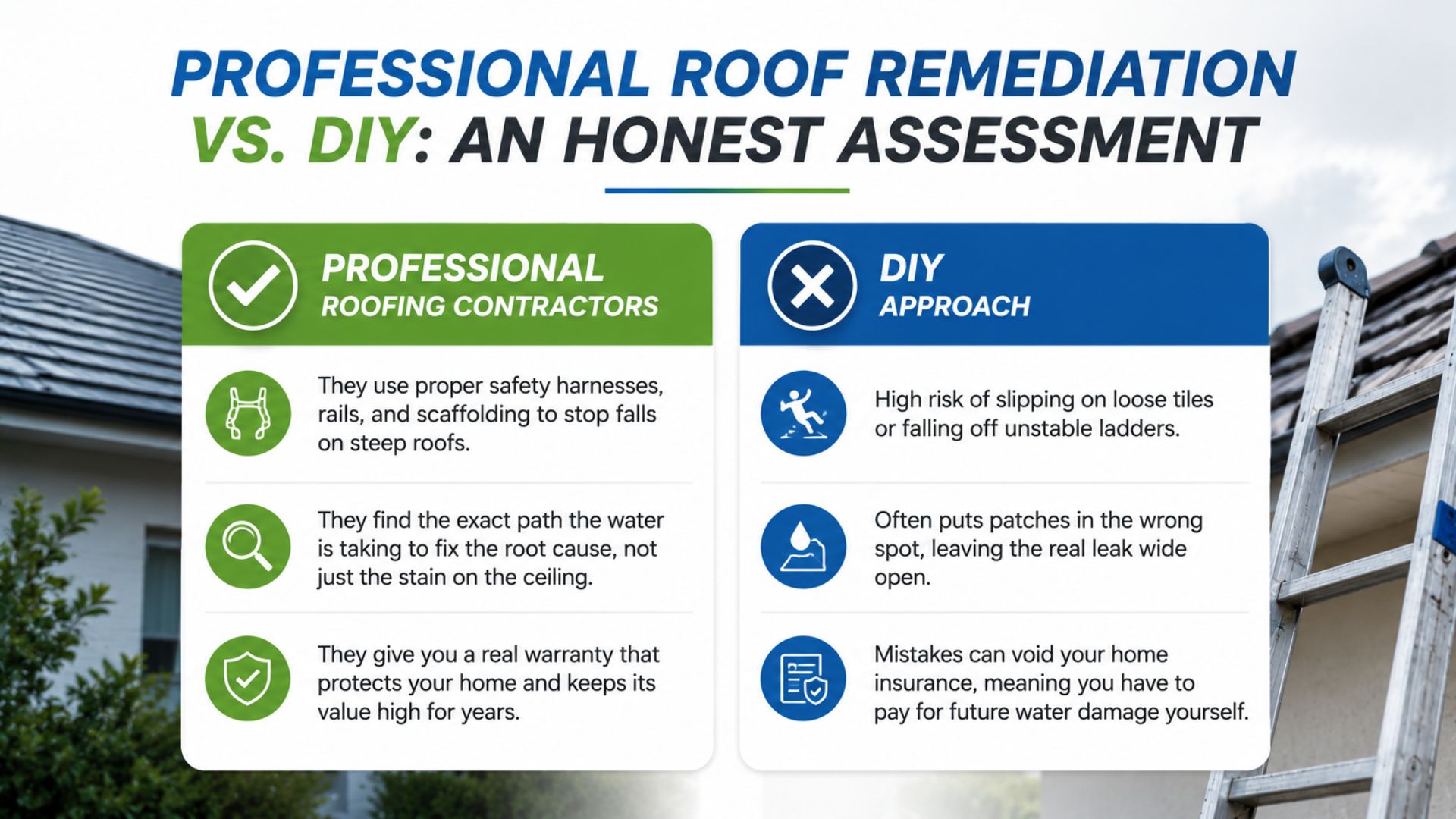
Professional Roof Remediation vs. DIY: An Honest Assessment
It is tempting to grab a ladder and try to patch a roof leak yourself over the weekend. But roofing is dangerous, and doing it yourself can cost you more money in the long run.
| Professional Roofing Contractors | DIY Approach |
| They use proper safety harnesses, rails, and scaffolding to stop falls on steep roofs. | High risk of slipping on loose tiles or falling off unstable ladders. |
| They find the exact path the water is taking to fix the root cause, not just the stain on the ceiling. | Often puts patches in the wrong spot, leaving the real leak wide open. |
| They give you a real warranty that protects your home and keeps its value high for years. | Mistakes can void your home insurance, meaning you have to pay for future water damage yourself. |
Why Timely Repairs Matter: Protect Your Home’s Long-Term Value
At the end of the day, paying for a professional roof repair is about protecting your biggest asset. Your roof is the main shield keeping your entire house safe.
When a leak is ignored, water slowly ruins your insulation, rots your wooden wall frames, and grows toxic black mould inside your home. What could have been a quick afternoon of repointing roof tiles can turn into a massive building project that costs thousands of dollars.
Also, a well-maintained roof keeps your home’s resale value high. People buying homes and building inspectors look very closely at roof lines and ceilings. Showing that you have a dry, professionally looked-after roof gives buyers confidence and keeps your property price strong.
The Sydney Roof Doctor Directory
To learn more about keeping your roof in good shape, check out our local guides:
- Our Main Services: See what we do directly on our Roof Repair page.
- Storm Emergencies: Read our emergency guide on Emergency Roof Leak Repairs: What Sydney Homeowners Need to Know.
- Why Roofs Leak: Learn the Top 7 Common Causes of Roof Leaks in Sydney Homes.
- Cool Your House: See how to let your roof breathe with our Whirly Bird Installation Guide for Australian Homes.
- Replace Old Valleys: Fix rusty roof channels using The Ultimate Guide to Roof Valley Replacement.
- Fix Your Skylights: Keep your skylights bright and dry with our Leaking Skylight Repairs Sydney: Complete Guide.
- Get Ready for Storms: Prepare for the next big storm with Is Your Roof Ready for the Next Sydney Storm?.
- Clean Gutters: Protect your house with The Hidden Cost of Neglect: Why Sydney Gutter Cleaning is Your Roof’s Best Defense.
Secure Your Home Before the Next Big Storm
Don’t wait for a huge storm to find out if your roof has a problem. Whether you need an expert to check your flashing, want reliable leaking roof repairs in Sydney, or want to lower your summer cooling bills with a new whirly birds setup, our friendly team can help.
Call The Sydney Roof Doctor today for an honest, professional look at your roof. We provide long-term fixes to keep your home safe, dry, and protected in every kind of weather.